
Definition:
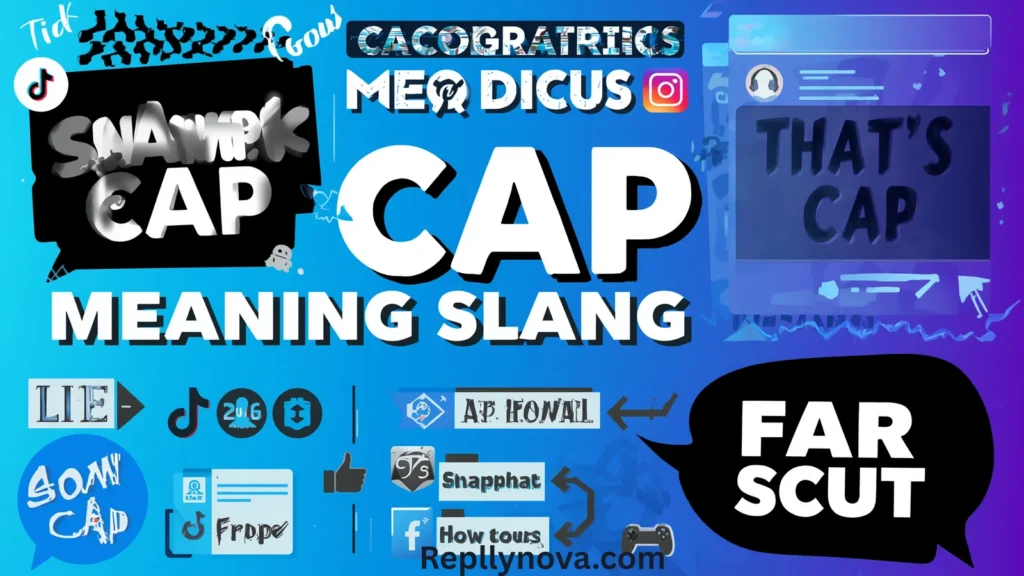
Cap meaning slang refers to a lie, exaggeration, or something that isn’t true. If someone says “That’s cap,” they mean “That’s false” or “You’re lying.” On the other hand, “No cap” means “I’m telling the truth” or “I’m being completely honest.” The phrase is widely used on TikTok, Instagram, Snapchat, X (Twitter), gaming communities, and in everyday conversations.
If you’ve spent any time on TikTok, Snapchat, Instagram, or X, you’ve probably seen someone comment “cap,” “no cap,” or even “that’s cap.” At first, it might seem like they’re talking about a hat, but in internet slang, “cap” has nothing to do with clothing. Instead, it’s one of the most popular ways to call out a lie, exaggeration, or fake claim in online conversations.
The cap meaning in slang is most commonly “a lie,” “false,” or “not true.” When someone says “that’s cap,” they’re accusing a statement of being dishonest or exaggerated. On the other hand, “no cap” means “I’m telling the truth” or “I’m being completely honest.” These expressions have become everyday language across texting, gaming, social media, and casual conversations, especially among Gen Z and younger Millennials.
Because slang evolves quickly, the meaning of cap can vary slightly depending on the platform, tone, and context. Drawing on common usage across popular social media platforms and modern texting trends, this guide explains what cap means, where it came from, how to use it correctly, examples in real conversations, and the difference between “cap” and “no cap” so you can understand and use the term with confidence.
Origin
Although many people associate cap with TikTok, the slang existed long before short-form videos became popular.
The expression comes from African American Vernacular English (AAVE), where “capping” has been used for decades to describe lying, boasting, or exaggerating.
Hip-hop culture helped spread the phrase into mainstream audiences. Rappers frequently used cap and no cap in lyrics, interviews, and social media posts.
By the late 2010s:
- TikTok creators embraced it.
- Twitch streamers used it constantly.
- YouTubers repeated it.
- Meme pages popularized it worldwide.
Today, it’s one of the most recognized internet slang terms.
Popularity
The rise of cap happened because it perfectly fits modern online communication.
Reasons it became popular include:
- Very short and easy to type
- Perfect for memes
- Frequently used in reaction videos
- Common in gaming communities
- Popular in sports discussions
- Frequently appears in TikTok captions
- Easy substitute for saying “lie”
You’ll commonly see it on:
- TikTok
- Snapchat
- Discord
- X (Twitter)
- YouTube comments
- Twitch chats
- Group texts
How It Is Used
People use cap differently depending on the conversation.
Calling Someone Out
Someone makes a claim you don’t believe.
Example
Person A:
I finished my homework in five minutes.
Person B:
Cap.
Meaning:
I don’t believe you.
Showing Honesty
Use no cap when emphasizing truthfulness.
Example:
That movie made me cry, no cap.
Meaning:
I’m completely serious.
Friendly Teasing
Friends often jokingly accuse each other of capping.
Example:
Friend:
I could beat anyone in basketball.
Reply:
Biggest cap of the year 😂
Social Media Comments
Examples include:
- That’s cap.
- No cap though.
- Stop capping.
- You’re capping.
- Zero cap.
- Huge cap.
- Certified cap.
Examples
Friendly Examples
Example 1
Friend:
I got free concert tickets!
Reply:
No cap?
Meaning:
Really?
Example 2
Bro, that’s cap 😂
Meaning:
I don’t believe you.
Example 3
I’m serious, no cap.
Meaning:
I’m telling the truth.
Example 4
Quit capping.
Meaning:
Stop lying.
Example 5
That’s actually true, no cap.
Meaning:
I’m being completely honest.
Professional Examples
The word cap generally isn’t appropriate in professional communication.
Instead of saying:
❌ That’s cap.
Say:
- That information appears incorrect.
- I don’t believe that’s accurate.
- Could you verify that?
- I think there’s been a misunderstanding.
- That doesn’t match the available evidence.
Example:
Instead of
That’s cap.
Use
I believe the data may need to be verified.
Funny Examples
- That’s Olympic-level cap. 🏅
- Bro is capping harder than Wi-Fi during a storm.
- Maximum cap detected.
- The cap detector is going to get confused.
- That’s Netflix-level fiction.
- Certified cap moment.
- Press X to doubt.
- That’s a fairy tale.
- The lie meter exploded.
- No cap…that was hilarious.
Comparison with Similar Terms
| Term | Meaning | Similar to Cap? | Typical Tone |
|---|---|---|---|
| Cap | Lie or exaggeration | Yes | Casual |
| No Cap | Truth; honestly | Opposite | Casual |
| Fake | Not real | Similar | Neutral |
| Bluff | Pretending | Somewhat | Neutral |
| BS | Nonsense | Similar | Informal |
| Lying | Being dishonest | Very similar | Direct |
| Exaggerating | Stretching the truth | Related | Neutral |
| Clickbait | Misleading headline | Context-specific | Internet |
Alternate Meanings
The word cap doesn’t always refer to slang.
Here are its other meanings.
| Meaning | Context |
|---|---|
| Hat | Clothing |
| Bottle cap | Packaging |
| Limit or maximum | Spending cap, salary cap |
| Graduation cap | Education |
| Protective cap | Construction or safety |
| Capitalization (“market cap”) | Finance |
| Cap (slang) | Lie or exaggeration |
Always rely on the conversation’s context.
Professional or Polite Alternatives
Instead of saying “That’s cap,” consider these alternatives depending on the situation.
| Informal | Professional Alternative |
|---|---|
| That’s cap. | That doesn’t appear accurate. |
| Stop capping. | Could you clarify your statement? |
| No cap. | Honestly… |
| That’s fake. | That information seems incorrect. |
| You’re lying. | I don’t believe that’s accurate. |
These alternatives are more appropriate in workplaces, schools, and formal discussions.
Common Mistakes
Many people misunderstand how to use cap. Here are some common errors to avoid.
Using “cap” to mean “cool”
Unlike slang terms such as fire or lit, cap does not mean something is impressive. It specifically refers to dishonesty or exaggeration.
Using It in Formal Emails
Avoid writing:
That’s cap.
Instead, write:
I believe there may be an error.
Confusing “cap” and “no cap”
Remember:
- Cap = Lie
- No cap = Truth
Assuming Everyone Knows the Slang
Older audiences or international readers may not recognize the phrase. Consider your audience before using it.
Overusing It
Saying cap in every sentence can make your writing sound repetitive. Use it naturally and only when it fits the conversation.
Quick Tips
- Cap means lie or false claim.
- No cap means honestly or I’m serious.
- Best used with friends or on social media.
- Avoid using it in business emails.
- Context matters because “cap” has several dictionary meanings.
- It’s common in TikTok, Snapchat, Discord, Instagram, gaming, and texting.
- “Stop capping” means “Stop lying.”
- Emojis like 😂, 🤥, 🙄, and 😭 often appear with the phrase in casual chats.
FAQs
What does cap mean in slang?
It means a lie, exaggeration, or false statement. Saying “that’s cap” means you don’t believe what someone said.
What does no cap mean?
No cap means I’m being honest, for real, or I’m telling the truth.
Is cap offensive?
Usually not. It’s informal slang and is often used jokingly among friends. However, calling someone a liar can still offend them depending on the context and tone.
Who started saying cap?
The term comes from African American Vernacular English (AAVE) and later became widely popular through hip-hop music, social media, and online culture.
Is cap only used on TikTok?
No. While TikTok helped popularize it, you’ll also find it on Instagram, Snapchat, Discord, Reddit, X (Twitter), YouTube, Twitch, and in everyday texting.
What does “stop capping” mean?
It means stop lying, stop exaggerating, or be honest.
Can I use cap in professional communication?
It’s best to avoid it. In professional settings, phrases like “that doesn’t seem accurate” or “could you clarify?” are more appropriate.
Why is cap so popular?
Its short length, catchy sound, and usefulness for quickly expressing disbelief or honesty made it perfect for memes, social media, and fast-paced online conversations.
Conclusion
The cap meaning slang has become a defining part of modern internet language. Whether someone says “that’s cap” to question a claim or “no cap” to emphasize honesty, the expressions are now deeply woven into texting, gaming, memes, and social media culture.
The key is understanding the context. Among friends, cap is a playful and efficient way to express disbelief. In professional settings, however, it’s better to use more formal language. By knowing when and how to use cap and no cap, you’ll be able to understand online conversations more easily and communicate naturally without sounding out of place.