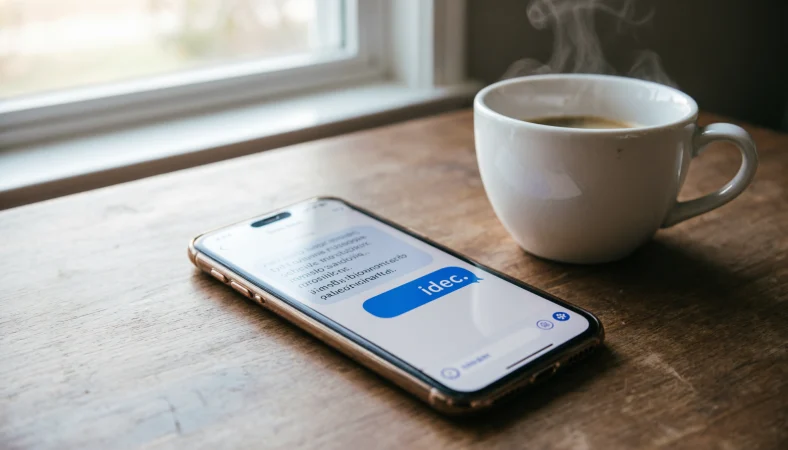

IDEC meaning in text: IDEC is an internet slang abbreviation for “I Don’t Even Care,” used in text messages, chats, and social media to express indifference, frustration, or a lack of interest in a situation.
Text messages and social media are full of abbreviations that can leave anyone confused, and IDEC is one of the latest examples. If you’ve received a message saying “IDEC” and wondered what the sender meant, you’re not alone. Internet slang evolves quickly, making it important to understand the context behind these short expressions.
IDEC most commonly stands for “I Don’t Even Care,” a phrase used to express indifference, frustration, or a lack of interest in a situation. Depending on the conversation, it can sound casual, sarcastic, or emotionally detached. In this guide, you’ll learn the exact meaning of IDEC in text, how people use it in chats and on social media, common examples, and when it’s appropriate to use it yourself.
IDEC = I don’t even care
Think of it this way:
| Acronym | Full Phrase | Emotional Weight |
|---|---|---|
| IDC | I don’t care | Neutral or slightly dismissive |
| IDEC | I don’t even care | Frustrated, exhausted, or defiant |
| IDGAF | I don’t give a f*** | Aggressive, angry, or reckless |
IDEC sits in the middle.
It’s stronger than IDC but softer than IDGAF.
It says “I’m done with this conversation” without swearing at someone.
Where You’ll See IDEC Used
People type IDEC everywhere informal communication happens.
Text messages. Instagram DMs. TikTok comment sections.
Group chats with friends. Discord servers. Even Snapchat captions.
Here’s the full list of common places:
- SMS and iMessage conversations
- WhatsApp and Telegram chats
- Twitter replies and quote tweets
- Reddit threads (especially AITA or relationship advice)
- Facebook Messenger
- Twitch chat (flying by at 100 miles an hour)
- Gaming voice chat text boxes
You will almost never see IDEC in a work email.
Or a college application essay.
Or a doctor’s appointment reminder.
Rule of thumb: If you wouldn’t wear pajamas there, don’t type IDEC there.
Real Texting Examples of IDEC in Action
Examples make this stuff click.
Here are five real world scenarios. Each one shows a different tone.
Example 1: The Exhausted Friend
Person A: “You said you’d be here at 8. It’s 8:45.”
Person B: “idec anymore. Traffic ruined my whole mood.”
Tone: Tired and defeated. They still showed up, but they’ve mentally checked out.
Example 2: The Defiant Teenager
Parent: “You’re grounded if you don’t clean your room.”
Teen: “idec. Do what you want.”
Tone: Rebellious and provocative. They’re testing boundaries.
Example 3: The Over It Dater
Person A: “He ghosted you for a week and then liked your old Instagram photo.”
Person B: “idec lol. That was three months ago.”
Tone: Genuinely unbothered. They’ve moved on completely.
Example 4: The Fake IDEC (They Actually Care)
Friend: “She’s dating your ex now.”
You: “idec.”
(You immediately check their tagged photos)
Tone: Performative. You want to seem like you don’t care. But you do. We’ve all been there.
Example 5: The Group Chat Closer
Chat: 47 messages about where to eat.
You: “idec just pick somewhere.”
Tone: Impatient but practical. You’re not angry. You just want the decision made.
Notice how the same four letters carry five completely different feelings.
Context is everything.
IDEC vs IDC vs IC: Stop Confusing These Three
This is where most people mess up.
They see IDEC and think it’s a typo of IDC.
Or they read IC as IDEC.
Let’s fix that forever.
The Big Three Comparison Table
| Acronym | Full Meaning | Typical Use Case | Emotional Temperature |
|---|---|---|---|
| IC | I see | Acknowledging a message without agreeing or disagreeing | Neutral, robotic, or polite |
| IDC | I don’t care | Genuine indifference or polite dismissal | Cool to lukewarm |
| IDEC | I don’t even care | Exasperation, defiance, or exaggerated apathy | Warm to hot (frustration) |
Quick test:
If someone says “The store is closed,” and you reply “IC,” you’re acknowledging.
If you reply “IDC,” you’re saying the closure doesn’t affect you.
If you reply “IDEC,” you’re saying you’re annoyed the store even exists.
See the difference?
Here’s another way to think about it.
IC is a nod.
IDC is a shrug.
IDEC is a shrug with an eye roll.
Is IDEC Rude? The Honest Answer
Yes. Sometimes. No. Other times.
It depends entirely on who’s talking and what you just said.
When IDEC Is Definitely Rude
- Someone shares something vulnerable. “My dog died.” “idec.” → Rude.
- A coworker asks for help on a shared project. “idec” → Rude and unprofessional.
- Your partner brings up a legitimate concern. “idec” → Relationship poison.
When IDEC Is Totally Fine
- Close friends arguing about something stupid. “You like pineapple on pizza?” “idec, eat what you want.” → Fine.
- A group chat debating a restaurant for 20 minutes. “idec just pick one.” → Fine.
- Responding to a ridiculous complaint. “You wore the same shirt twice this week.” “idec lol.” → Fine.
The Gray Zone
- Family group chats. Your mom might not know the acronym. She’ll just see “I don’t even care” and think you’re angry. Avoid unless your family talks like sailors.
- New friendships. You haven’t earned the right to be dismissive yet. Use full sentences.
- Public comments on social media. Typing “idec” under someone’s post looks aggressive. Even if you didn’t mean it that way.
Simple rule: If saying “I don’t even care” out loud would start a fight, don’t text it either.
The Psychology Behind Why People Type IDEC
Why does this acronym exist?
Why not just type the full phrase?
Three reasons.
Reason 1: Speed
Typing “I don’t even care” takes about two seconds on a phone keyboard.
Typing “idec” takes half a second.
When you’re firing off 50 texts a day, those seconds add up.
Reason 2: Emotional Distance
Writing “I don’t even care” feels heavy.
It’s a full sentence. It has weight.
Abbreviating it to “idec” softens the blow. It’s still dismissive, but it feels more like slang than a statement.
Think of it as the difference between shouting “I’M FINE” and muttering “fine.”
Same message. Different volume.
Reason 3: Belonging
Using texting acronyms signals that you’re in the know.
You understand digital culture. You’re not a parent trying to use “yeet” in a sentence.
Typing “idec” instead of the full phrase says “I speak this language fluently.”
No one consciously thinks that. But subconsciously? Absolutely.
A Quick History: Where Did IDEC Come From?
No one knows the exact first use.
Acronyms like “IDC” appeared in early internet chat rooms and AOL Instant Messenger in the late 1990s.
“IDEC” came later, probably around the early 2010s.
Why?
Because social media demanded more emotional range.
IDC worked for simple indifference. But platforms like Twitter and Tumblr needed a way to express exasperated indifference.
The “even” got added. The acronym stretched to four letters. And it stuck.
Today, IDEC appears in Urban Dictionary (first entry around 2013) and millions of daily texts.
It’s not going anywhere.
Similar Texting Acronyms You Should Know
You don’t need a dictionary of 200 abbreviations.
But these seven often show up next to IDEC. Recognizing them helps you respond appropriately.
| Acronym | Meaning | Tone | When You’d Use It |
|---|---|---|---|
| IDC | I don’t care | Casual indifference | “Which movie?” “IDC, you pick.” |
| IDEC | I don’t even care | Emphatic indifference | “But that’s your favorite place.” “IDEC, I’m over it.” |
| IDGAF | I don’t give a f*** | Aggressive defiance | “Everyone’s judging you.” “IDGAF what they think.” |
| ICYMI | In case you missed it | Informative | Sharing news or a link |
| IKR | I know, right? | Enthusiastic agreement | “This show is so good.” “IKR!” |
| SMH | Shaking my head | Disappointment | “He forgot again.” “SMH.” |
| TBH | To be honest | Honest opinion | “TBH, I didn’t like it.” |
Notice that IDEC is the only one in this list that adds an intensifier (“even”) to a base phrase.
That’s what makes it unique.
When You Should Use IDEC (and When You Absolutely Shouldn’t)
Let’s get practical.
You’re typing a message right now. Should you use IDEC?
Green Light Scenarios (Go ahead)
- You’re texting a close friend who uses similar slang.
- The conversation is low stakes (pizza toppings, not funeral plans).
- You’re ending a circular argument where no one’s actually upset.
- You’re joking and the other person will know you’re joking.
Yellow Light Scenarios (Maybe, but be careful)
- You’re in a family group chat with older relatives.
- You’re texting someone you just met last week.
- The topic is mildly serious (a disagreement about plans, not a betrayal).
- You’ve already used IDEC twice in the same conversation. Three times looks hostile.
Red Light Scenarios (Do not use)
- Someone is crying, venting, or sharing trauma.
- A boss, client, or professor is on the other end.
- You’re apologizing. (“I’m sorry you feel that way, idec” makes zero sense.)
- The other person just used full sentences and proper grammar. Match their energy.
Pro tip: When in doubt, type the whole phrase. “I don’t even care” sounds softer than “idec” when you say it out loud. Abbreviations accidentally add harshness.
How to Respond When Someone Texts You IDEC
You get an “idec.” Now what?
Your response depends on why they sent it.
If they’re genuinely frustrated
Don’t match their energy. Don’t say “okay” and walk away.
Try one of these:
“You sound upset. Want to talk about it?”
“Okay. I hear you.”
“Let’s take a break and come back.”
If they’re joking around
Play along.
“idec either lol”
“cool cool cool”
“well I DEC (I definitely even care)”
If they’re trying to end a pointless debate
Let them win. It’s not worth it.
“Fine. You pick the place.”
“Fair enough.”
If they’re being rude on purpose
You don’t have to tolerate disrespect. Respond firmly:
“That felt dismissive. Can we talk normally?”
“I’ll give you some space.”
Remember: IDEC is a tool, not a weapon. How someone uses it tells you a lot about them.
Common Myths About IDEC
Let’s clear up three big misconceptions.
Myth 1: IDEC is just lazy spelling of IDC
False. The “E” stands for “even.” It’s intentional. People who type IDEC want you to know they’ve added emphasis. It’s not a typo. It’s an upgrade.
Myth 2: Only teenagers use IDEC
False. Teens use it most, sure. But adults in their twenties and thirties use it too. Especially in group chats with old college friends. Anyone who grew up texting uses acronyms. Age just changes how often.
Myth 3: IDEC always means the person is angry
False. Sometimes it means exhausted. Sometimes it means sarcastic. Sometimes it means they literally don’t care about the topic, but they care about you. Never assume anger unless the rest of the message sounds angry.
IDEC on Different Platforms:
The same acronym lands differently depending on where you type it.
Text Message (SMS/iMessage)
Most common. Very casual. Perfectly fine between friends.
Instagram DMs
Also common. Slightly more performative because DMs often get screenshotted. Use with people you trust.
TikTok Comments
Very common. But remember: comments are public. Typing “idec” under someone’s video can look like you’re attacking them. Add an emoji to soften it. “idec 🤷” works. Just “idec” looks mean.
Twitter (X)
Public again. Use carefully. “idec” as a quote tweet reply starts fights. Use it in your own tweets instead. “idec what anyone says, this album is great” → fine.
Never. Absolutely never. Delete this thought from your mind.
Discord / Slack
Fine in casual channels. Never in work Slack unless your company has a very strange culture.
Fine in most subreddits. Avoid in serious ones like r/legaladvice or r/relationships. In r/teenagers? Go wild.
The Grammar of IDEC (Yes, Texting Has Grammar)
Believe it or not, there are rules.
No one wrote them down. But everyone follows them.
Rule 1: Always lowercase. “IDEC” in all caps looks like shouting. “Idec” with a capital I looks like a typo. “idec” is the standard.
Rule 2: No period at the end. Periods make texts sound passive aggressive. “idec.” feels cold. “idec” feels casual.
Rule 3: You can add a question mark but only if you’re quoting someone. Example: “She really said ‘idec’?” That’s fine.
Rule 4: Emojis change the meaning entirely.
| Text | Meaning |
|---|---|
| idec | Neutral or slightly dismissive |
| idec 😂 | I’m laughing at how little I care |
| idec 🙄 | I’m annoyed but whatever |
| idec 😭 | I’m pretending not to care but I’m actually sad |
| idec ❤️ | I care about you, not this topic |
Emojis do a lot of heavy lifting. Use them.
How IDEC Fits Into the Bigger Picture of Texting Slang
Texting language evolves faster than spoken language.
Ten years ago, “lol” meant laughing out loud. Now it means “I acknowledge your message and feel mildly positive about it.”
IDEC is part of a family of acronyms that express emotional states quickly.
Think of it as emotional shorthand.
Here’s where it fits on the emotional spectrum of common texting acronyms:
Positive → lol, ikr, tbh (when used nicely)
Neutral → ic, idc, nm (not much)
Negative leaning → idec, smh, wyd (when accusatory)
Very negative → idgaf, tf, stfu
IDEC sits right on the line between neutral and negative.
It’s not a swear word. But it’s not a hug either.
Real Data: How Often Do People Actually Type IDEC?
Exact numbers are hard to track. But we can look at trends.
Google Trends shows “idec meaning” searches spike every few months. Usually after the acronym appears in a viral tweet or TikTok video.
Urban Dictionary lists multiple entries for IDEC. The oldest is from 2013. Newest is from 2023. That’s a decade of continuous use.
Social listening tools (like Brand24 or Mention) estimate that “idec” appears in roughly 5,000 to 10,000 public social media posts per day. Private texts? Probably 10 times that.
So yes. People use it. A lot.
Should You Teach IDEC to Someone Who Doesn’t Know It?
Maybe. But don’t be annoying about it.
If a friend or family member asks what “idec” means, explain it simply.
“It stands for ‘I don’t even care.’ People use it when they’re frustrated or trying to end a conversation.”
If they don’t ask, don’t explain.
No one likes unsolicited grammar lessons. Even for slang.
And whatever you do, don’t correct someone who uses it “wrong.” There is no wrong. Slang doesn’t have a rulebook. That’s the whole point.
The Future of IDEC: Will It Stick Around?
Some acronyms die fast. Remember “lms” (like my status)? Or “ttyl” (talk to you later)? Those feel dated now.
Others stick for decades. “Lol” is still here after 30 years.
Where does IDEC fall?
Probably in the middle. It won’t vanish next year. But it might feel less common as people switch to voice notes, video messages, and emoji reactions.
Here’s a prediction:
By 2030, “idec” will still exist. But people will use it less than today. Voice typing will get faster. Emojis will get more specific. The need for four letter emotional shorthand will shrink.
But for now? It’s alive and well.
Conclusion
IDEC in text usually stands for “I Don’t Even Care.” People use it in chats, text messages, and social media to show indifference, frustration, or a lack of interest in a situation. Depending on the context and tone, it can sound casual, humorous, or even dismissive.
Understanding the meaning of IDEC helps you interpret online conversations more accurately and use the abbreviation appropriately in your own messages. As with many internet slang terms, paying attention to the surrounding conversation is the best way to understand what the sender really means.
Discover More Articles About:
- SP Meaning on Snapchat, Instagram, TikTok & Facebook In 2026
- Tralalero Tralala Meaning: Definition, Origin, Usage and Social Media Trend Explained In 2026