
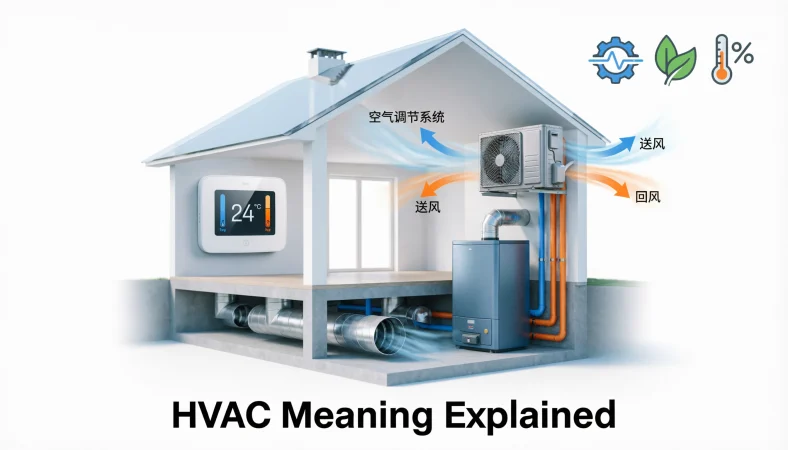

Definition:
HVAC stands for Heating, Ventilation, and Air Conditioning, a system designed to regulate indoor temperature, air quality, and overall comfort in homes, offices, and commercial buildings.
HVAC is one of the most important technologies used in modern buildings, ensuring comfortable indoor environments throughout the year. Whether it’s keeping a home warm during winter, cool during summer, or maintaining proper airflow and humidity levels, HVAC systems play a critical role in everyday life. From residential houses to hospitals, schools, and large office complexes, these systems help create healthy and energy-efficient indoor spaces.
Understanding the meaning of HVAC is valuable for homeowners, property managers, and anyone interested in building maintenance or energy efficiency. HVAC systems typically combine heating units, ventilation components, and air conditioning equipment into a single integrated solution. As energy-saving technologies continue to evolve, modern HVAC systems are becoming smarter, more efficient, and environmentally friendly. Knowing what HVAC means can help you make informed decisions about installation, maintenance, repairs, and energy consumption while improving indoor comfort and air quality.
Why Understanding HVAC Matters
HVAC is much more than just heating and cooling. Modern systems help:
- Maintain comfortable indoor temperatures
- Improve air circulation
- Filter dust, allergens, and pollutants
- Control humidity levels
- Reduce energy consumption
- Enhance workplace and home comfort
As energy costs rise and environmental concerns grow, understanding HVAC systems has become increasingly important for homeowners, renters, business owners, and property managers.
Origin of the Term HVAC
The acronym HVAC emerged during the twentieth century as building technology advanced.
Before modern HVAC systems existed, buildings relied on:
- Fireplaces for heating
- Open windows for ventilation
- Fans for air movement
- Natural airflow for cooling
As mechanical heating and cooling technologies improved, engineers began combining these functions into integrated systems. The term HVAC became the industry standard for describing the complete environmental control system inside a building.
Today, HVAC is recognized worldwide in construction, engineering, architecture, property management, and home improvement industries.
Breaking Down HVAC: What Each Letter Means
H = Heating
Heating systems keep indoor spaces warm during colder months.
Common heating equipment includes:
- Furnaces
- Boilers
- Heat pumps
- Radiant heating systems
- Electric heaters
The heating component ensures comfortable indoor temperatures while protecting buildings from freezing conditions.
V = Ventilation
Ventilation refers to the movement and exchange of air.
Its primary goals are:
- Bringing fresh outdoor air indoors
- Removing stale air
- Reducing indoor pollutants
- Managing moisture levels
- Improving overall air quality
Proper ventilation is essential for maintaining a healthy indoor environment.
AC = Air Conditioning
Air conditioning cools indoor spaces and helps remove excess humidity.
Air conditioning systems:
- Lower indoor temperatures
- Reduce humidity
- Improve comfort during hot weather
- Help protect electronics and equipment
Modern AC systems often include advanced filtration and energy-saving features.
How an HVAC System Works
An HVAC system operates by combining heating, cooling, ventilation, and air filtration processes.
Basic Process
- Air enters the system.
- Filters remove dust and particles.
- The air is heated or cooled.
- Ductwork distributes conditioned air.
- Ventilation systems maintain airflow.
- Thermostats monitor and regulate temperatures.
The result is a comfortable indoor environment regardless of outdoor weather conditions.
Common HVAC Components
HVAC Component Overview Table
| Component | Purpose |
|---|---|
| Furnace | Produces heat |
| Air Conditioner | Cools indoor air |
| Heat Pump | Provides heating and cooling |
| Thermostat | Controls temperature settings |
| Ductwork | Distributes air throughout the building |
| Air Filter | Removes dust and contaminants |
| Ventilation System | Maintains fresh airflow |
| Evaporator Coil | Absorbs heat from indoor air |
| Condenser Unit | Releases heat outdoors |
| Blower Fan | Moves air through the system |
Each component works together to maintain comfort and efficiency.
Real-World Usage of HVAC
The term HVAC is commonly used in many industries and everyday conversations.
Examples of HVAC in Sentences
| Example | Context |
|---|---|
| “The HVAC system needs maintenance before summer.” | Home maintenance |
| “Our office installed a new HVAC unit.” | Workplace improvement |
| “The HVAC technician repaired the furnace.” | Service and repair |
| “Energy-efficient HVAC systems lower utility bills.” | Energy savings |
| “The building’s HVAC design improves indoor air quality.” | Construction and engineering |
Where HVAC Systems Are Used
HVAC systems are found in nearly every type of building.
Residential Buildings
Home HVAC systems provide:
- Heating
- Cooling
- Ventilation
- Humidity control
Commercial Buildings
Businesses rely on HVAC for:
- Employee comfort
- Customer satisfaction
- Equipment protection
- Energy management
Industrial Facilities
Factories use specialized HVAC systems to:
- Control temperatures
- Manage air quality
- Protect machinery
- Meet safety regulations
Healthcare Facilities
Hospitals depend on advanced HVAC systems for:
- Infection control
- Air filtration
- Sterile environments
- Patient comfort
Why HVAC Is Important
Comfort
HVAC systems help maintain pleasant indoor temperatures year-round.
Air Quality
Quality ventilation and filtration remove:
- Dust
- Allergens
- Smoke particles
- Airborne contaminants
Energy Efficiency
Modern HVAC systems are designed to:
- Reduce energy consumption
- Lower utility costs
- Improve sustainability
Health Benefits
Proper HVAC operation can:
- Reduce mold growth
- Improve breathing conditions
- Minimize airborne irritants
- Enhance indoor environmental quality
Popular HVAC System Types
Split Systems
The most common residential HVAC setup.
Features:
- Indoor furnace
- Outdoor air conditioning unit
Heat Pump Systems
Heat pumps can:
- Heat during winter
- Cool during summer
They are known for energy efficiency.
Ductless Mini-Split Systems
Ideal for:
- Apartments
- Room additions
- Older homes without ducts
Hybrid Systems
These combine:
- Heat pumps
- Traditional furnaces
The system automatically selects the most efficient option.
Packaged Systems
All components are housed in a single unit, often installed on rooftops or outside buildings.
HVAC vs Related Terms
Many people confuse HVAC with other heating and cooling terms.
Comparison Table
| Term | Meaning | Includes Ventilation? |
|---|---|---|
| HVAC | Heating, Ventilation, and Air Conditioning | Yes |
| AC | Air Conditioning only | No |
| Heating System | Provides warmth only | No |
| Climate Control | General environmental regulation | Sometimes |
| HVACR | HVAC plus Refrigeration | Yes |
| Ventilation System | Air exchange only | Yes |
The key difference is that HVAC combines multiple environmental control functions into one integrated system.
What Does HVAC Technician Mean?
An HVAC technician is a trained professional who:
- Installs HVAC systems
- Performs maintenance
- Diagnoses problems
- Repairs equipment
- Improves system efficiency
HVAC technicians work in residential, commercial, and industrial environments.
Common HVAC Technician Tasks
- Replacing filters
- Repairing furnaces
- Servicing air conditioners
- Testing thermostats
- Cleaning ductwork
- Inspecting ventilation systems
HVAC and Energy Efficiency
Modern HVAC systems are becoming smarter and more environmentally friendly.
Energy-Saving Features
- Smart thermostats
- Variable-speed motors
- High-efficiency filters
- Zoning systems
- Programmable controls
Benefits include:
- Lower energy bills
- Reduced carbon footprint
- Improved comfort
- Longer equipment lifespan
HVAC Maintenance Tips
Regular maintenance helps maximize performance.
Recommended HVAC Maintenance Checklist
Monthly
- Check air filters
- Inspect vents for blockages
Every Season
- Clean outdoor units
- Test thermostat settings
- Check airflow
Annually
- Schedule professional inspection
- Clean coils
- Inspect electrical components
- Evaluate system efficiency
Preventive maintenance often reduces costly repairs.
Alternate Meanings of HVAC
While HVAC almost always refers to Heating, Ventilation, and Air Conditioning, alternate meanings occasionally appear in niche industries or company-specific terminology.
However, in everyday use, construction, engineering, and building management, HVAC overwhelmingly refers to environmental control systems for buildings.
Common Misconceptions About HVAC
“HVAC Means Only Air Conditioning”
Incorrect.
HVAC includes:
- Heating
- Ventilation
- Cooling
“Ventilation Isn’t Important”
False.
Ventilation is critical for:
- Indoor air quality
- Health
- Moisture control
“Bigger HVAC Systems Are Always Better”
Not necessarily.
Oversized systems can:
- Waste energy
- Increase costs
- Create uneven temperatures
Proper sizing is essential.
Professional Terms Related to HVAC
You may encounter these terms when researching HVAC systems:
| Term | Meaning |
|---|---|
| BTU | British Thermal Unit |
| SEER | Seasonal Energy Efficiency Ratio |
| AFUE | Annual Fuel Utilization Efficiency |
| Thermostat | Temperature control device |
| Heat Pump | Heating and cooling equipment |
| Air Handler | Indoor air circulation component |
| Ductwork | Air distribution network |
Understanding these terms helps when comparing systems and speaking with contractors.
HVAC Examples in Everyday Life
Homeowner Example
“Before summer arrives, I schedule HVAC maintenance to make sure my air conditioner runs efficiently.”
Office Example
“The company upgraded its HVAC system to improve indoor air quality and lower energy costs.”
School Example
“Modern HVAC systems help students stay comfortable during hot and cold weather.”
Hospital Example
“Advanced HVAC filtration reduces airborne contaminants in sensitive medical environments.”
Frequently Asked Questions
1. What does HVAC stand for?
HVAC stands for Heating, Ventilation, and Air Conditioning, a system that controls indoor temperature, airflow, humidity, and air quality.
2. Is HVAC the same as air conditioning?
No. Air conditioning is only one part of HVAC. HVAC also includes heating and ventilation.
3. What is the purpose of an HVAC system?
The purpose is to provide comfort, improve air quality, regulate temperature, and control humidity indoors.
4. What does an HVAC technician do?
HVAC technicians install, maintain, troubleshoot, and repair heating, cooling, and ventilation equipment.
5. How long do HVAC systems last?
Most HVAC systems last between 10 and 20 years depending on maintenance, usage, and equipment quality.
6. Why is HVAC maintenance important?
Maintenance improves efficiency, reduces breakdowns, extends equipment life, and lowers operating costs.
7. What is the difference between HVAC and HVACR?
HVACR includes Refrigeration in addition to Heating, Ventilation, and Air Conditioning.
8. Is HVAC a good career?
Yes. HVAC is considered a stable and in-demand trade with opportunities in residential, commercial, and industrial sectors.
Conclusion
Understanding the HVAC meaning is essential because these systems play a major role in everyday comfort, health, and energy efficiency. HVAC stands for Heating, Ventilation, and Air Conditioning, combining three critical functions that regulate indoor environments in homes, offices, hospitals, schools, and industrial facilities.
From maintaining comfortable temperatures to improving indoor air quality, HVAC systems have become a fundamental part of modern living. Whether you’re a homeowner researching a new system, a student exploring career options, or simply curious about industry terminology, knowing how HVAC works can help you make better decisions about comfort, maintenance, and energy efficiency.
The key takeaway is simple: HVAC is much more than heating or cooling alone. It’s a complete system designed to create healthier, safer, and more comfortable indoor spaces year-round.