
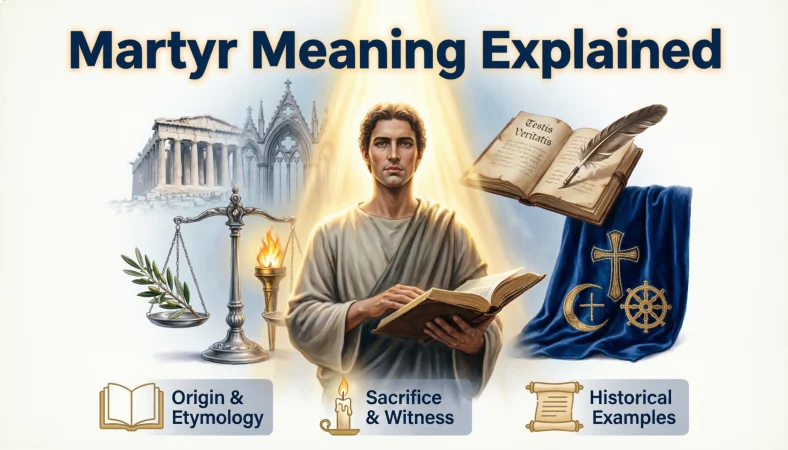

A martyr is a person who willingly suffers persecution, injury, imprisonment, or death because of their beliefs, principles, religion, cause, or convictions. The term is most commonly used for someone who sacrifices their life rather than abandon deeply held beliefs.
In modern language, martyr meaning can also refer to someone who endures hardship for a cause or, sometimes, a person who exaggerates their suffering to gain sympathy.
Words connected to sacrifice and courage often carry powerful emotional weight, and martyr is one of the strongest examples. Throughout history, martyrs have been remembered for standing firm in their beliefs despite facing extreme consequences. From religious figures and political activists to individuals who sacrificed themselves for a greater cause, the concept of martyrdom has shaped cultures, faiths, and historical movements around the world.
Understanding the meaning of martyr goes beyond a simple dictionary definition. The word has deep historical roots, religious significance, and modern-day applications that can vary depending on context. In some situations, calling someone a martyr is a compliment that recognizes bravery and self-sacrifice. In others, it may carry a negative or sarcastic tone.
This guide explains the complete meaning of martyr, its origin, examples, usage, related terms, and frequently asked questions to help you understand when and how the word is used correctly.
What Is the Meaning of Martyr?
A martyr is someone who:
- Suffers or dies for a belief or principle.
- Refuses to abandon a cause despite persecution.
- Makes a significant sacrifice for what they consider right.
- Is honored by a community for their dedication and courage.
Simple Definition
Martyr = A person who suffers or dies for their beliefs, faith, principles, or cause.
Example
“The activist became a martyr after losing his life while fighting for human rights.”
In this sentence, the individual is remembered for sacrificing their life for a cause they believed in.
Origin of the Word Martyr
The word martyr comes from the Greek word “martys”, meaning “witness.”
Originally, the term referred to someone who publicly testified to their beliefs. Over time, especially in religious contexts, it became associated with individuals who were persecuted or killed because of their faith.
Etymology Timeline
| Period | Development |
|---|---|
| Ancient Greek | “Martys” meaning witness |
| Early Christianity | Applied to believers who died for their faith |
| Medieval Era | Expanded to religious heroes and saints |
| Modern Usage | Includes religious, political, military, and social causes |
Because of its historical development, martyr remains strongly associated with sacrifice and conviction.
Why Is the Word Martyr Important?
The concept of martyrdom exists in many cultures and religions because it represents:
- Courage
- Dedication
- Loyalty
- Self-sacrifice
- Commitment to principles
People often view martyrs as symbols of inspiration because they place beliefs above personal safety or comfort.
Martyr Meaning in Religion
Religion is one of the most common contexts in which the word martyr appears.
A religious martyr is someone who suffers or dies rather than renounce their faith.
Common Characteristics of Religious Martyrs
- Strong religious conviction
- Refusal to abandon beliefs
- Acceptance of suffering
- Recognition by followers
Example
“The saint is remembered as a martyr who remained faithful despite persecution.”
Many religious traditions honor martyrs through ceremonies, holidays, memorials, or historical records.
Martyr Meaning in History
Beyond religion, the term is frequently used in historical and political discussions.
Historical Example
A political leader who dies while fighting for independence or civil rights may be referred to as a martyr.
Example Sentence
“He became a national martyr after sacrificing his life during the struggle for freedom.”
In historical writing, martyr often highlights sacrifice made for a collective cause.
Martyr Meaning in Everyday Language
In modern conversations, the word is sometimes used more loosely.
Someone may be described as a martyr if they consistently sacrifice their own needs for others.
Example
“She works long hours helping everyone else and never thinks about herself. She’s practically a martyr.”
Here, the word doesn’t mean death or persecution. Instead, it emphasizes personal sacrifice.
Positive vs Negative Meanings of Martyr
The word can carry different emotional tones depending on context.
| Tone | Meaning | Example |
|---|---|---|
| Positive | Courageous self-sacrifice | “The firefighter became a martyr while saving lives.” |
| Respectful | Honoring dedication | “The community remembers him as a martyr.” |
| Neutral | Historical description | “Many martyrs were recorded during that period.” |
| Negative | Excessive self-sacrifice | “He acts like a martyr whenever things go wrong.” |
| Sarcastic | Seeking sympathy | “Don’t be such a martyr.” |
Context is extremely important when using this word.
Martyr Examples in Different Contexts
Religious Context
“The believers honored the martyr for his unwavering faith.”
Historical Context
“She was considered a martyr for the independence movement.”
Social Cause Context
“Many view him as a martyr for environmental activism.”
Family Context
“My mother jokingly calls herself a martyr after doing all the household chores.”
Workplace Context
“Stop playing the martyr and ask for help when you need it.”
Example Table: How Martyr Is Used
| Situation | Meaning of Martyr |
|---|---|
| Religious persecution | Someone who dies for faith |
| Political struggle | Person who sacrifices life for a cause |
| Social activism | Individual suffering for a movement |
| Family conversation | Someone making personal sacrifices |
| Sarcastic remark | Person exaggerating suffering |
Common Phrases Using Martyr
Martyr for a Cause
Someone who sacrifices themselves for a mission or movement.
Example:
“He became a martyr for social justice.”
Make a Martyr of Someone
To cause someone to become a symbol through punishment or death.
Example:
“The harsh treatment made a martyr of the protest leader.”
Martyr Complex
A psychological or behavioral tendency where a person seeks sympathy through self-sacrifice.
Example:
“Her martyr complex makes it difficult for her to accept help.”
Martyr vs Related Terms
Many people confuse martyr with other words involving sacrifice or heroism.
Martyr vs Hero
| Martyr | Hero |
|---|---|
| Suffers or dies for beliefs | Performs brave actions |
| Focus on sacrifice | Focus on achievement or bravery |
| Often linked to conviction | May or may not involve sacrifice |
Martyr vs Victim
| Martyr | Victim |
|---|---|
| Suffers for a cause or belief | Suffers due to circumstances |
| Often voluntary commitment | Usually involuntary |
| Symbol of conviction | Not necessarily connected to beliefs |
Martyr vs Saint
| Martyr | Saint |
|---|---|
| Person who suffers or dies for beliefs | Recognized for holiness |
| May become a saint | Not all saints are martyrs |
Is Being Called a Martyr Always Positive?
No.
While many people associate martyr with honor and sacrifice, the word can sometimes be critical.
Positive Usage
“She sacrificed everything to defend her community.”
Negative Usage
“He’s acting like a martyr because nobody thanked him.”
In casual speech, calling someone a martyr may suggest they are seeking attention through self-sacrifice.
Martyr Meaning in Literature
Authors often use martyrs as symbolic characters.
Common themes include:
- Sacrifice
- Justice
- Faith
- Resistance
- Loyalty
- Moral courage
A martyr character often inspires others through their actions and commitment.
Martyr Meaning in Modern Media
News reports, documentaries, and historical discussions frequently use the term.
Examples include:
- Religious conflicts
- Political movements
- Human rights activism
- Military history
- Social justice campaigns
Because the word carries emotional significance, journalists typically use it carefully and within context.
Alternate Meanings of Martyr
Although the traditional definition involves suffering or death for beliefs, modern usage includes:
Self-Sacrificing Person
Someone who consistently puts others before themselves.
Person Seeking Sympathy
A sarcastic use describing someone who exaggerates hardship.
Symbol of a Cause
Someone whose suffering becomes an inspiration to supporters.
Professional and Polite Alternatives to Martyr
Depending on context, you may prefer a less emotionally charged term.
| Alternative | Best Used When |
|---|---|
| Advocate | Supporting a cause |
| Activist | Promoting social change |
| Supporter | Backing a movement |
| Hero | Highlighting bravery |
| Champion | Defending a cause |
| Defender | Protecting people or principles |
| Sacrificial figure | Academic discussions |
| Dedicated individual | Professional writing |
Usage Tips for the Word Martyr
Use It When:
✅ Discussing religious sacrifice
✅ Talking about historical figures who died for a cause
✅ Referring to recognized acts of self-sacrifice
Be Careful When:
⚠️ Discussing current political conflicts
⚠️ Using it in emotionally sensitive situations
⚠️ Applying it sarcastically
⚠️ Describing people who may not identify with the label
Because the term carries strong emotional and cultural significance, context matters greatly.
Why Does the Concept of Martyrdom Continue to Matter?
The idea of martyrdom remains relevant because societies continue to value:
- Conviction
- Integrity
- Courage
- Resistance against injustice
- Dedication to principles
Stories of martyrs often inspire future generations and become part of collective memory.
Frequently Asked Questions
1. What is the simple meaning of martyr?
A martyr is a person who suffers or dies because of their beliefs, faith, principles, or cause.
2. Is a martyr always someone who dies?
No. While the traditional meaning often involves death, the word can also describe someone who suffers greatly for a belief or cause.
3. What is the origin of the word martyr?
The word comes from the Greek term “martys,” meaning “witness.”
4. What is a religious martyr?
A religious martyr is someone who faces persecution or death rather than abandon their faith.
5. Can martyr be used negatively?
Yes. In everyday conversation, it can describe someone who exaggerates their suffering or constantly seeks sympathy.
6. What is the difference between a hero and a martyr?
A hero is known for bravery or achievement, while a martyr is specifically recognized for suffering or dying for beliefs or a cause.
7. What does “martyr complex” mean?
A martyr complex refers to a tendency to seek attention, validation, or sympathy through excessive self-sacrifice.
8. Is martyr a compliment?
Sometimes. It can be a respectful term recognizing courage and sacrifice, but it can also be sarcastic depending on the situation.
Conclusion
The martyr meaning centers on sacrifice, conviction, and unwavering dedication to beliefs or causes. Historically rooted in the Greek word for “witness,” the term evolved to describe individuals who endured suffering or death rather than abandon their principles. Today, martyr is used in religious, historical, political, and everyday contexts.
The key to understanding the word lies in context. It can express admiration for extraordinary courage, describe a historical figure who died for a cause, or even carry a sarcastic tone when referring to someone who seeks sympathy through self-sacrifice.
When using the term, consider the audience, subject matter, and emotional weight it carries. Doing so ensures accurate, respectful, and effective communication.