
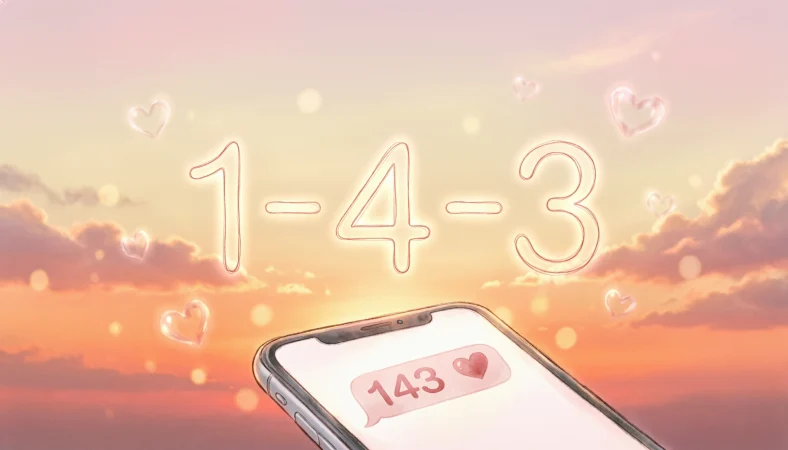

Have you ever received a text message that simply said “143” and wondered if it was a typo, a secret code, or something more meaningful? You’re not alone. In our fast-paced digital world, where communication is often reduced to emojis and abbreviations, this simple three-digit number has carved out a unique space in modern vernacular. Whether you’re a teenager navigating the complexities of young love, a parent trying to decode your child’s messages, or simply curious about internet culture, understanding the 143 meanings is like unlocking a secret language of affection that has stood the test of time.
The beauty of 143 lies in its simplicity: three numbers, one powerful message. It’s become a shorthand for “I Love You,” but it’s so much more than that. It’s a cultural artifact, a time-saving device, and for many, a more comfortable way to express deep emotions without the weight that comes with uttering those three heavy words. In this comprehensive guide, we’ll explore everything from its fascinating origins to its modern-day usage, giving you a complete understanding of why this number sequence has captured hearts across generations.
143 Meaning:
143 is a numerical code that stands for “I Love You.” Each number corresponds to the number of letters in each word of the phrase:
- 1 = “I” (one letter)
- 4 = “Love” (four letters)
- 3 = “You” (three letters)
This clever numerical representation transforms a simple number sequence into a powerful expression of affection. It’s commonly used in text messages, social media posts, and even written notes as a quick, discreet, and sometimes less intimidating way to say “I love you.” The beauty of its meaning lies not just in what it says, but in how it says it through a shared understanding between sender and receiver.
The Surprising Origin and Journey of 143
From Morse Code to Pop Culture: A Historical Timeline
The story of how 143 became synonymous with “I Love You” is as fascinating as the meaning itself. Contrary to what many might assume, this isn’t a recent internet invention. The code has roots dating back over a century, making it one of the oldest examples of text-based communication shorthand.
The Morse Code Connection (1830s-1900s): While not directly originating from Morse code, the numerical system of representing words by letter count shares similarities with early telegraphic codes. Operators often used numerical shortcuts to save time and bandwidth, making the 143 system a natural evolution.
The Lighthouse Family (1893): One of the earliest documented uses comes from the Winfield, Kansas, lighthouse family, where a teenager named Minnie used “143” in her diary to secretly express her feelings for a boy. This discovery, published in a 1930s edition of the “Word Ways” journal, provides one of the first concrete examples of this numerical code in use.
Pop Culture Catalyst (1990s): The 143 meaning gained mainstream recognition when it appeared in Mr. Rogers’ Neighborhood. Fred Rogers famously stated that he weighed exactly 143 pounds throughout his adult life, considering it his perfect weight because it represented “I Love You.” This wholesome connection cemented the number’s place in American pop culture.
The Digital Revolution (2000s-Present): With the rise of SMS messaging and character limits, “143” found its true calling. It became the perfect digital shorthand short enough to fit anywhere, meaningful enough to convey deep emotion, and discreet enough for private conversations.
Why 143 Stuck While Others Faded
Have you ever wondered why some abbreviations become timeless while others fade into obscurity? The 143 meaning endures because it strikes a perfect balance between:
- Memorability: The numerical pattern (1-4-3) is easy to remember
- Mystery: It feels like a secret code, making users feel like part of an exclusive club
- Versatility: It works across all ages, cultures, and relationship types
- Efficiency: In our time-pressed world, every character counts
How 143 Is Used in Real Life
The Many Tones and Contexts of 143
Understanding the 143 meaning isn’t just about knowing what it stands for it’s about recognizing how to use it appropriately across different relationships and situations. Let’s explore how this simple number can convey dramatically different messages depending on context.
Friendly and Affectionate Use
When used between friends or family members, “143” carries a warm, casual tone. It’s perfect for:
- Ending a conversation with a loved one
- Responding to a kind gesture
- Cheering up someone who’s feeling down
- Simply reminding someone they’re appreciated
Example: “Thanks for picking up my coffee this morning! 143 ❤️”
Romantic and Intimate Context
In romantic relationships, “143” can serve as:
- A daily reminder of affection between partners
- A low-pressure way to express love early in a relationship
- A playful variation of saying “I love you”
- A discreet message in public settings
Example: “Can’t wait to see you tonight. 143, babe 😘”
Playful and Flirtatious Usage
The code’s mysterious nature makes it perfect for:
- Testing romantic interest
- Creating shared secrets
- Adding excitement to early dating stages
- Leaving cute notes or surprises
Example: “Guess what this number means… 143 💕”
Neutral and Casual References
Sometimes, “143” appears in neutral contexts like:
- Social media captions about appreciation
- Celebrity posts thanking fans
- Generic expressions of gratitude
- Brand messaging targeting younger audiences
Example: “143 to everyone who made this event possible!”
143 Meaning in Text Messages
Text messaging has become the primary domain for 143 usage. Here’s how people incorporate it into their digital conversations:
| Scenario | How It’s Used | Example |
| Goodnight texts | As a quick, affectionate sign-off | “Sweet dreams! 143 🌙” |
| Response to good news | Expressing support and excitement | “That’s amazing! 143 🎉” |
| Quick check-ins | Maintaining connection throughout the day | “Hope you’re having a good day. 143 💫” |
| Inside jokes | Creating shared meaning | “Remember that time… 143 😂” |
| Long-distance relationships | Bridge the physical gap | “Missing you extra today. 143 💔” |
| Auto-replies or quick responses | Efficient affection | “Can’t text now, but 143!” |
Emoji Combinations and Punctuation Effects
The 143 meaning is often enhanced with complementary emojis and punctuation, adding emotional depth to the simple numeric code:
- 143 ❤️ – Classic love expression
- 143 💕 – Sweet and gentle affection
- 143 😘 – Kiss and love combined
- 143 🥰 – Warm, glowing affection
- 143!!!! – Excited or enthusiastic love
- 143… – Thoughtful or deep affection
- 143 💫 – Magical or special love
- 143 🌟 – You’re my star/special one
These combinations allow users to fine-tune the intensity and nature of their message without adding extra words, preserving the efficiency that makes 143 so popular.
What’s the Difference? 143 vs. 831 vs. ILY
One of the fascinating aspects of numerical love language is the variety of codes that exist. While 143 might be the most famous, it’s certainly not alone. Understanding these differences helps you choose the right code for any situation.
| Code | Meaning | Word Count | Tone | Best Used For |
| 143 | I Love You | 1-4-3 | Classic, versatile | Any relationship, any context |
| 831 | I Love You | 8-3-1 | Playful, modern | Casual texts, social media |
| 459 | I Love You | 4-5-9 | Alternative, unique | When you want something different |
| 1432 | I Love You Too | 1-4-3-2 | Response to 143 | Acknowledging returned affection |
| ILY | I Love You | Abbreviation | Direct, clear | Quick texts, informal settings |
| 520 | I Love You | Chinese numeral | International, romantic | Cross-cultural relationships |
When to Use Each Variation
Choose 143 when you want:
- A classic, universally recognized code
- Something short and sweet
- To feel connected to tradition
- A gentle way to express love
Choose 831 when you want:
- A more playful approach
- To stand out from the crowd
- Something that feels fresh and modern
Choose 459 when you want:
- An alternative if someone already uses 143
- To create your own inside meaning
- Something less commonly known
Choose 1432 when you want:
- To respond to someone who sent 143
- To return the sentiment immediately
- To complete the exchange
Choose ILY when you want:
- The most direct approach
- No room for misinterpretation
- To be absolutely clear
Polished and Professional Alternatives to 143
While 143 is charming and efficient, there are times when a more polished expression is appropriate. Whether you’re in a professional setting or want to sound more articulate, here are graceful alternatives:
For Professional Settings
- “Thank you for your continued support” – Professional appreciation
- “I greatly appreciate your work” – Respectful acknowledgment
- “Your efforts are sincerely valued” – Formal appreciation
- “I’m grateful for your contribution” – Professional gratitude
For More Expressive Personal Communication
- “You mean the world to me” – Deep personal connection
- “I cherish you” – Intimate and profound
- “You’re incredibly special to me” – Warm and personal
- “I have deep affection for you” – Strong emotional expression
- “I’m deeply fond of you” – Sentimental and loving
When You Want to Sound More Romantic or Sentimental
- “My heart belongs to you” – Poetic and romantic
- “You’re my everything” – Comprehensive love expression
- “I adore everything about you” – Detailed appreciation
- “You complete me” – Classic romantic sentiment
While these alternatives might require more typing or speaking effort, they offer greater depth and personalization. The key is knowing when 143’s brevity serves you well and when you need the full weight of spoken or written words.
The Emotional Impact of 143: Why It Works So Well
Psychological Benefits of Using Numerical Codes
The popularity of 143 isn’t just about convenience there’s a psychological appeal that makes it particularly effective for emotional communication:
- Reduced Vulnerability: Saying “I love you” outright can feel incredibly vulnerable. “143” offers a gentler way to express the same sentiment with less emotional risk.
- Shared Secret: Using a code creates an “in-group” feeling, strengthening bonds between people who understand it.
- Anticipation and Discovery: The mystery behind the numbers can make receiving a “143” feel more exciting and meaningful.
- Playful Romance: It adds an element of fun to romantic expression, keeping relationships feeling fresh and young.
- Digital Native Communication: For generations raised on texting, numerical codes feel natural and authentic.
Building Deeper Connections Through Simple Numbers
When you use 143, you’re not just saying three words, you’re participating in a cultural tradition that spans over a century. This connection to history adds depth to what might otherwise be a simple text message. The recipient isn’t just receiving a number; they’re receiving a message encoded with meaning that requires their participation to decode.
Think about it: when you send “143,” you’re asking the recipient to pause and engage with your message. They must remember or discover what it means, making them an active participant in the exchange rather than a passive recipient. This cognitive involvement can make the message feel more meaningful and memorable.
Fun Facts About 143 Meaning You Didn’t Know
Fred Rogers’ Perfect Weight: As mentioned earlier, Fred Rogers famously claimed that 143 was his ideal weight, representing “I Love You.” This has become one of the most heartwarming trivia facts associated with the number.
Mathematical Pattern: 143 is a semiprime number (11 × 13), making it mathematically interesting as well as emotionally significant.
International Variations: While 143 is common in English-speaking countries, other cultures have their own numerical love codes. For example, “520” in Chinese sounds like “I love you,” and “1379” in some Asian texting culture means “forever love.”
Celestial Connection: There’s an asteroid named 143 Adria, adding a cosmic dimension to this love code.
Time Stamp: 1:43 PM or AM is often viewed as an auspicious time to send a loving message.
Pop Culture References: From movies to music to television shows, 143 has appeared countless times in popular media, cementing its place in cultural consciousness.
143 in Different Relationships
How to Use 143 with Family Members
When expressing love to family members, 143 can be:
- A quick “goodnight” text to parents
- A response to family photos or updates
- A simple way to end phone conversations
- A daily check-in message
How to Use 143 with Romantic Partners
In romantic relationships, 143 can be:
- A daily morning or goodnight ritual
- A playful alternative to saying “I love you”
- A secret code shared just between partners
- A way to say “I love you” in public without embarrassment
How to Use 143 with Friends
Between friends, 143 means:
- “I appreciate you”
- “You’re important to me”
- “I’m grateful for our friendship”
- “I’m thinking of you”
How to Use 143 in Professional Relationships
Generally, 143 is too intimate for professional relationships. However, in close work friendships:
- Use sparingly and appropriately
- Ensure the relationship justifies the intimacy
- Consider “thank you” or “appreciate you” instead
FAQs
1. What does 143 mean from a girl or guy?
The 143 meaning remains consistent regardless of who sends it; it always represents “I Love You.” However, the emotional weight and intention can vary. A casual “143” from a friend might mean “I appreciate you,” while the same numbers from a romantic partner likely carry deeper romantic meaning. Gender doesn’t change the code’s fundamental meaning; it’s all about the context and relationship dynamic.
2. What does 1437 mean?
1437 is a variation that stands for “I Love You Forever.” The “7” represents “forever” (which has seven letters), adding a more permanent, long-term commitment to the original 143. This variation is often used in serious romantic relationships where expressing eternity feels appropriate.
3. What does 143 mean on TikTok, Snapchat, or other social media?
On these platforms, 143 maintains its “I Love You” meaning but can appear in various contexts:
- TikTok: Often appears in captions, comments, or as hashtags (#143) to express appreciation for creators
- Snapchat: Used in snaps or as a quick response to show affection
- Instagram: Common in stories, captions, or comments as a shorthand for love
- Twitter/X: Used in tweets expressing appreciation or affection
4. Is 143 always romantic?
No! While 143 originated as a romantic expression, it has evolved to encompass all forms of love and appreciation. People use it with family members, close friends, and even in casual contexts to mean “I appreciate you” or “you’re important to me.” The tone depends entirely on the relationship between sender and receiver.
5. What is the difference between 143 and 1432?
1432 means “I Love You Too.” The “2” represents “too” (which has three letters, but in this case, the 2 stands for “too” as in “also”). This response is perfect for:
- Returning a “143” sentiment
- Letting someone know their feelings are mutual
- Completing a romantic exchange
- Showing that the affection is reciprocated
6. Why do people say 143 instead of “I love you”?
People choose 143 for several reasons:
- Less intimidating: It feels easier to send a number than to type out three powerful words
- More playful: It adds fun and mystery to romantic expression
- Convenience: It saves time and characters in texting
- Privacy: It offers discretion in public settings
- Tradition: It connects users to a historical form of code communication
7. Is 143 used in texting and online dating?
Yes, 143 is extremely common in both texting and online dating. In dating apps, it’s often used as a low-pressure way to express interest or affection before both parties are ready for the full phrase “I love you.” It’s also popular in early dating stages as a playful way to test romantic interest.
8. Can 143 be used casually or sarcastically?
While 143 is primarily a positive, affectionate code, it can occasionally be used sarcastically or casually:
- In jokes: Between friends as an inside joke
- In sarcasm: As an ironic response to something over-the-top
- In casual contexts: As a more relaxed version of “I love you”
- In memes: As part of internet humor
However, be cautious with sarcastic usage: the recipient might not appreciate the code being used flippantly, especially if they interpret it sincerely.
143 in Popular Culture: From Movies to Music
The 143 meaning has permeated popular culture, appearing in various media forms:
- Music lyrics: Artists have referenced 143 in songs about love
- Movie dialogue: Characters use the code to express affection secretly
- Television shows: From sitcoms to dramas, 143 has made appearances
- Books and literature: Authors use it to show modern relationships
- Brand marketing: Companies use 143 to connect with younger audiences
This widespread cultural adoption has helped cement 143 as more than just an abbreviation; it’s a genuine part of our shared language around love.
The Future of 143: Will It Last?
In an era of ever-changing internet slang, some abbreviations fade quickly. However, 143 has shown remarkable staying power for several reasons:
Historical Roots: Unlike many temporary internet trends, 143 has over a century of history behind it, giving it depth and significance.
Simplicity: The code is easy to remember and use, requiring no special knowledge beyond basic counting.
Emotional Weight: It conveys genuine emotion, which keeps it relevant as long as people want to express affection efficiently.
Cross-Generational Appeal: Grandparents and grandchildren alike can understand and use 143.
Cultural Integration: It’s been featured in enough media and cultural references to maintain awareness.
Given these factors, 143 seems likely to remain a fixture in our communication toolkit for years to come. While new codes may emerge, the classic 143 will probably continue to hold its place as the original digital love language.
How to Respond to 143: A Quick Guide
When someone sends you “143,” here’s how you might respond:
| Situation | Appropriate Response |
| You feel the same way | “1432” (I love you too) or “143 ❤️” |
| You’re not sure yet | “Thank you 💕” or a warm response |
| You’re just friends | “Aww, you’re sweet! 😊” |
| You want to be playful | “143? What does that mean? 😉” |
| You want to be romantic | “I love you too, so much ❤️❤️❤️” |
| You’re in a professional context | No response needed, or simply “Thank you” |
The key is matching the tone of your response to both the relationship and the context in which you received the message.
Conclusion:
The 143 meaning represents more than just a clever abbreviation; it’s a testament to human creativity in communication and our endless desire to express love in new and meaningful ways. From its humble beginnings as a teenager’s diary code to its current status as a globally recognized symbol of affection, 143 has proven that sometimes the simplest expressions carry the deepest meaning.
As you navigate the complex world of modern communication, consider adding 143 to your emotional vocabulary. Whether you’re sending a quick message to a loved one, leaving a sweet note for your partner, or simply appreciating a moment of connection, this three-digit code offers a beautiful way to say what matters most.