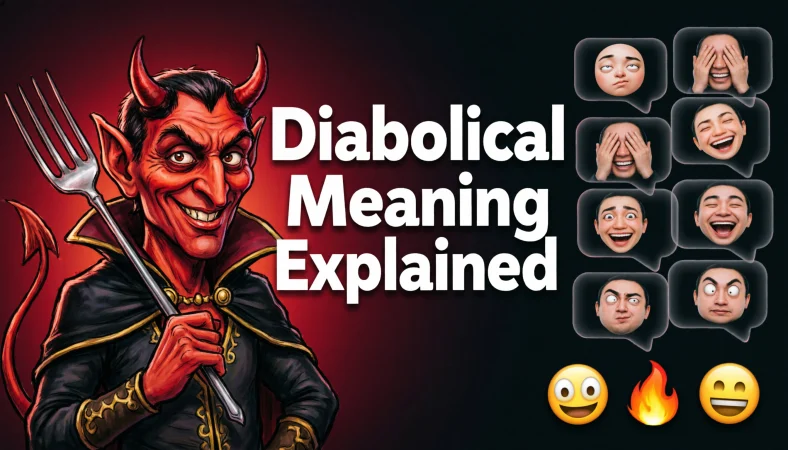
The word diabolical is an adjective used to describe something extremely evil, cruel, mischievous, or outrageously terrible. It can refer to serious wrongdoing or be used humorously to describe something wildly chaotic or unfair.
Example:
- “That villain’s diabolical plan nearly destroyed the city.”
- “Putting pineapple on every slice of pizza is diabolical 😭.”
In modern conversations, the term can be either serious or playful depending on context and tone.
Understanding the diabolical meaning is important because it is a powerful word often used to describe actions, plans, or behavior that seem shockingly evil, cruel, or morally wrong. Originally derived from the idea of something related to the devil, the term has evolved to describe anything that appears wicked, malicious, or exceptionally sinister.
Whether you encounter it in literature, news reports, movies, or everyday conversation, understanding the diabolical meaning helps you recognize situations where the word is used to emphasize extreme wrongdoing or cunning behavior. “Diabolical” conveys a level of evil or mischief that goes beyond ordinary bad behavior. In this guide, we’ll explore the full diabolical meaning, its origins, common uses, examples, and how it differs from similar words so you can use it confidently and accurately.
Origin of the Word “Diabolical”
The word diabolical comes from the Greek word diabolos, meaning “devil” or “slanderer.” It later passed through Latin and French before becoming part of the English language.
Word Breakdown
| Part | Meaning |
|---|---|
| Diabol | Devil or evil spirit |
| -ical | Related to |
So, diabolical literally means “related to the devil” or “devilish.”
The term has been used in English since the 1600s to describe wicked behavior, cruel actions, or evil intentions.
Why Is “Diabolical” Popular Online?
In recent years, diabolical became extremely popular on social media platforms like TikTok, Twitter/X, Reddit, YouTube, and memes.
People now use it in two major ways:
1. Serious Meaning
Used to describe something truly cruel, evil, manipulative, or disturbing.
Example:
- “The criminal’s actions were absolutely diabolical.”
2. Funny or Dramatic Slang
Used jokingly for something chaotic, unfair, annoying, or wildly creative.
Example:
- “Who mixes ketchup with coffee? That’s diabolical 💀.”
This humorous exaggeration is one reason the word exploded in meme culture.
How “Diabolical” Is Used in Real Life
The meaning changes depending on tone and context.
Serious Usage
When used seriously, diabolical describes:
- Evil plans
- Cruel behavior
- Manipulation
- Violent acts
- Harmful intentions
Examples:
- “The dictator carried out a diabolical scheme.”
- “The movie villain had a diabolical laugh.”
- “Her revenge plot was truly diabolical.”
Humorous Usage
Online, the word is often exaggerated for comedic effect.
Examples:
- “Charging your friends for water at your house is diabolical.”
- “That exam was diabolical 😭.”
- “Eating fries with mayonnaise is diabolical behavior.”
Tone of the Word “Diabolical”
The tone depends heavily on the situation.
| Tone | Meaning | Example |
| Negative | Evil or cruel | “A diabolical crime shocked the town.” |
| Dramatic | Intense or outrageous | “That was a diabolical mistake.” |
| Funny | Playfully chaotic | “Sending homework at midnight is diabolical 😂.” |
| Sarcastic | Over-the-top criticism | “Your playlist is diabolical.” |
Is “Diabolical” Always Negative?
Mostly yes, but not always seriously negative.
In modern slang, people often use it dramatically without genuinely meaning “evil.”
Example Comparison
| Sentence | Meaning |
| “The villain was diabolical.” | Truly evil |
| “This spicy sauce is diabolical.” | Extremely intense or crazy |
| “Your prank was diabolical 😂.” | Mischievously funny |
Context matters a lot.
Examples of “Diabolical” in Sentences
Everyday Conversation Examples
- “That traffic today was diabolical.”
- “His sense of humor is absolutely diabolical.”
- “The weather conditions were diabolical.”
- “You ate the last slice without asking? Diabolical.”
- “The game’s final boss is diabolical.”
Funny Social Media Examples
- “Whoever invented Monday mornings is diabolical.”
- “Putting raisins in cookies should be illegal… diabolical behavior.”
- “My friend spoiled the ending of the show. Truly diabolical 😭.”
Serious Examples
- “The documentary exposed a diabolical corruption scandal.”
- “The mastermind behind the attack was described as diabolical.”
- “The novel features a diabolical antagonist.”
“Diabolical” in Pop Culture
The word often appears in:
- Movies
- TV shows
- Video games
- Comic books
- Meme culture
- Music lyrics
Villains are frequently described as diabolical because the word sounds dramatic and powerful.
Common Pop Culture Phrases
- “Diabolical genius”
- “Diabolical mastermind”
- “Diabolical plan”
- “Diabolical laugh”
The term became even more recognizable through internet memes and reaction videos.
Difference Between “Diabolical” and Similar Words
Many people confuse diabolical with words like evil, sinister, or wicked. While similar, each has a slightly different feeling.
| Word | Main Meaning | Tone |
| Diabolical | Devilishly cruel or outrageously chaotic | Dramatic |
| Evil | Morally wrong or harmful | Serious |
| Wicked | Bad or mischievous | Flexible |
| Sinister | Threatening or dark | Creepy |
| Devilish | Mischievously playful | Light/Funny |
| Cruel | Intentionally hurtful | Direct |
Quick Comparison
- Diabolical = dramatic and extreme
- Sinister = secretly threatening
- Wicked = can be playful or serious
- Devilish = mischievous but lighter
Diabolical vs Devilish
These two words are closely related but not identical.
| Diabolical | Devilish |
| More intense | Less intense |
| Often implies cruelty | Often playful |
| Sounds darker | Sounds mischievous |
| Common in dramatic speech | Common in casual speech |
Example
- “A diabolical torture scheme” → very dark
- “A devilish grin” → playful mischief
Can “Diabolical” Be a Compliment?
Sometimes — jokingly.
In gaming, sports, comedy, or strategy discussions, people may use diabolical positively to praise cleverness.
Examples
- “That chess move was diabolical.”
- “Her roast was diabolical 😂.”
- “That strategy was genius-level diabolical.”
Here, it means:
- clever
- savage
- unexpectedly brilliant
Not literally evil.
Professional and Polite Alternatives
Because diabolical can sound harsh or dramatic, you may want softer alternatives in professional settings.
Better Alternatives for Formal Use
| Informal Word | Professional Alternative |
| Diabolical plan | Harmful strategy |
| Diabolical behavior | Unethical conduct |
| Diabolical mistake | Serious error |
| Diabolical conditions | Extremely difficult conditions |
| Diabolical management | Poor leadership |
Workplace Example
Instead of:
- “The client’s request is diabolical.”
You could say:
- “The request is extremely challenging.”
- “The requirements are unusually difficult.”
Alternate Meanings of “Diabolical”
Although the primary meaning relates to evil or outrageous behavior, the word can also mean:
1. Extremely Difficult
- “That puzzle was diabolical.”
2. Intensely Chaotic
- “The airport situation was diabolical.”
3. Brilliantly Cruel or Clever
- “That trap in the game was diabolical.”
Modern slang has expanded the word beyond its original religious meaning.
Common Situations Where People Use “Diabolical”
In Gaming
- difficult bosses
- unfair traps
- savage tactics
Example:
“That level design is diabolical.”
In Relationships
- dramatic jokes
- playful teasing
- revenge stories
Example:
“You ignored my text for three days? Diabolical.”
In Food Discussions
- weird combinations
- extra spicy meals
- shocking recipes
Example:
“Chocolate-covered pickles are diabolical.”
In Sports
- insane trick plays
- ruthless strategies
Example:
“That fake move was diabolical.”
Is “Diabolical” a Slang Word?
Technically, no.
Diabolical is a real dictionary word with centuries of history. However, social media has turned it into a trendy slang-style expression used dramatically or humorously.
So today, it works as both:
- a formal vocabulary word
- an internet slang expression
Common Grammar and Usage Tips
Correct Form
Adjective:
- diabolical
Adverb Form
- diabolically
Example:
- “The villain smiled diabolically.”
Noun Form
- diabolism
- diabolicalness (rare)
Mistakes People Make With “Diabolical”
1. Using It Too Seriously in Casual Contexts
Because the word sounds intense, it may feel overly dramatic in professional communication.
2. Confusing It With “Difficult”
While it can mean difficult informally, its original meaning relates to evil or wickedness.
3. Overusing It Online
Internet trends made the word popular, but repeating it too often can weaken its impact.
Examples Table: Serious vs Funny Usage
| Situation | Example Sentence | Tone |
| Crime documentary | “The killer’s actions were diabolical.” | Serious |
| Gaming | “That boss fight is diabolical.” | Dramatic |
| Friendship joke | “You ate my fries? Diabolical.” | Funny |
| Office frustration | “This schedule is diabolical.” | Exaggerated |
| Meme culture | “Pineapple pizza is diabolical 😂.” | Playful |
Why People Love Using the Word “Diabolical”
The word became popular because it:
- sounds dramatic
- feels expressive
- works in memes
- exaggerates emotions humorously
- makes reactions more entertaining
Compared to saying “bad” or “crazy,” diabolical sounds stronger and more memorable
FAQs
What does diabolical mean in slang?
In slang, diabolical usually means outrageously chaotic, savage, shocking, unfair, or hilariously evil in a dramatic way.
Is diabolical a bad word?
No, it is not a swear word. However, it usually carries a negative meaning related to evil, cruelty, or extreme behavior.
Can diabolical be funny?
Yes. Online and in memes, people often use diabolical humorously to exaggerate something silly or annoying.
What is a diabolical person?
A diabolical person is someone considered extremely cruel, wicked, manipulative, or mischievous.
What is the difference between evil and diabolical?
Evil is a broad term for morally bad behavior, while diabolical sounds more dramatic, devilish, or outrageously wicked.
Is diabolical formal or informal?
It can be both. The word appears in formal writing, literature, and journalism, but it is also widely used casually online.
What is a synonym for diabolical?
Common synonyms include:
- wicked
- sinister
- evil
- devilish
- cruel
- monstrous
Why do people say “that’s diabolical”?
People use the phrase to react strongly to something shocking, unfair, mischievous, or absurdly funny.
Conclusion
The word diabolical has evolved from a serious term associated with evil and devilish behavior into a dramatic modern expression used across conversations, memes, gaming, and social media.
Today, it can describe:
- cruel actions
- outrageous situations
- clever strategies
- hilarious chaos
- difficult challenges
Its popularity comes from how expressive and entertaining it sounds. Whether someone is talking about a movie villain, a brutal exam, or a funny food combination, diabolical adds intensity and emotion instantly.
The key to understanding the word is context. In serious situations, it means deeply wicked or cruel. In casual online conversations, it often means wildly chaotic, savage, or ridiculously funny.
Used correctly, diabolical can make your speech more vivid, dramatic, and memorable just don’t overuse it unless you want every inconvenience in life to sound like a supervillain plot.

Caleb Foster is a professional content creator at RepllyNova.com, recognized for producing clear, engaging and insightful articles. He is committed to making complex topics understandable, interesting and accessible for all audiences.