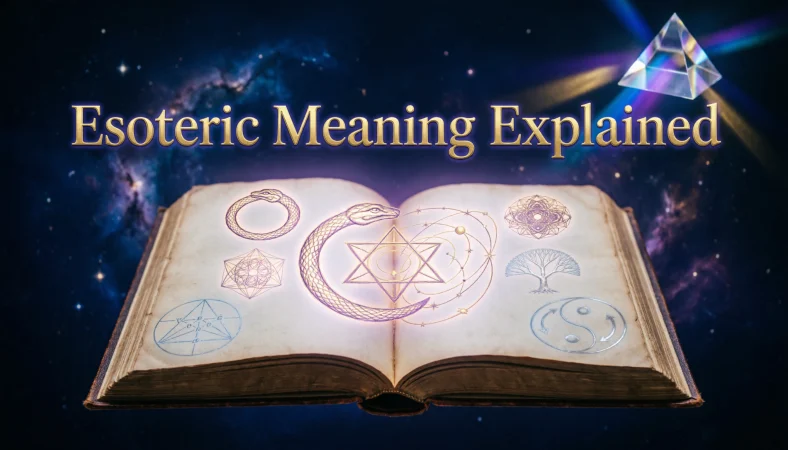
Esoteric meaning: “Esoteric” describes something intended for or understood by only a select group of people with special knowledge, expertise, or interest.
Pronunciation: eh-suh-TEHR-ik
Part of speech: Adjective
Quick Example
- “The professor’s lecture became so esoteric that most students got confused.”
In simple words, if something feels “too advanced,” “deep,” “specialized,” or “only experts understand it,” it may be called esoteric.
The word “esoteric” is often used to describe ideas, knowledge, or subjects that are difficult for the average person to understand. You may encounter the term in discussions about philosophy, spirituality, literature, psychology, science, or internet culture where certain concepts are understood only by a small, specialized group of people. Because of its intellectual and mysterious tone, “esoteric” is commonly used to describe hidden knowledge, advanced theories, or niche interests.
In simple terms, esoteric means something intended for or understood by only a limited number of people with specialized knowledge or interest. The word can describe secret teachings, highly technical discussions, symbolic art, or even inside jokes shared within a specific community.
Why the Word “Esoteric” Matters Today
The word “esoteric” appears more often than many people realize. You may hear it in:
- Academic discussions
- Philosophy and psychology
- Online debates
- Literature reviews
- Spiritual or mystical conversations
- Technology and niche hobbies
- Social media commentary
People use it to describe anything from complicated theories to hidden spiritual teachings. In modern internet culture, it can even describe niche memes, underground communities, or highly specialized interests.
Origin of the Word “Esoteric”
The word esoteric comes from the Greek word esōterikos, meaning “inner” or “belonging to an inner circle.”
Historically, ancient schools of philosophy often divided teachings into:
| Type | Meaning |
|---|---|
| Exoteric | Public teachings for everyone |
| Esoteric | Private teachings for selected students |
Philosophers such as Aristotle were associated with the idea of deeper teachings reserved for advanced learners.
Over time, the word evolved beyond philosophy and now describes anything highly specialized or difficult for outsiders to understand.
Esoteric Meaning in Simple Words
If you want the easiest explanation possible:
Esoteric = complicated or specialized knowledge understood by only a few people.
Think about:
- Advanced quantum physics
- Rare philosophical theories
- Ancient mystical rituals
- Highly technical coding language
- Inside jokes from niche communities
These can all be considered esoteric depending on the audience.
How “Esoteric” Is Used in Everyday Conversations
Although it sounds formal, people use “esoteric” in many real-life situations.
Common Usage Examples
| Sentence | Tone |
|---|---|
| “That podcast discusses esoteric philosophy.” | Neutral |
| “His jokes are too esoteric for most viewers.” | Slightly dismissive |
| “She enjoys reading esoteric spiritual books.” | Friendly/curious |
| “The meeting became esoteric very quickly.” | Neutral |
| “Only hardcore fans understand those esoteric references.” | Casual |
Esoteric Meaning in Different Contexts
1. Academic Context
In education, “esoteric” often refers to advanced or specialized subjects.
Example:
- “The research paper contained esoteric terminology.”
This means the paper used difficult language understood mainly by experts.
2. Spiritual or Mystical Context
The term is extremely common in spirituality and mysticism.
Example:
- “He studies esoteric traditions and ancient symbolism.”
This may refer to hidden teachings, occult ideas, meditation systems, or mystical philosophies.
3. Technology and Science
Experts may describe certain technical discussions as esoteric.
Example:
- “Their debate about programming architecture was too esoteric for beginners.”
4. Pop Culture and Internet Culture
Online communities use “esoteric” humor or references.
Example:
- “That meme is so esoteric 😂”
Meaning: only a tiny group of people will understand it.
Is “Esoteric” Positive or Negative?
The tone depends entirely on context.
Positive Meaning
Sometimes “esoteric” suggests intelligence, depth, or expertise.
Example:
- “She has an esoteric understanding of ancient literature.”
This sounds respectful and impressive.
Neutral Meaning
Often, it simply means specialized.
Example:
- “The workshop covered esoteric topics in neuroscience.”
Negative or Dismissive Meaning
Sometimes it implies something is unnecessarily complicated or inaccessible.
Example:
- “His explanation was too esoteric for ordinary readers.”
This suggests the speaker may have overcomplicated things.
Esoteric vs Similar Words
Many people confuse “esoteric” with words like “obscure,” “mystical,” or “abstract.” Here’s the difference.
Esoteric vs Obscure
| Word | Meaning |
|---|---|
| Esoteric | Understood by a small group with specialized knowledge |
| Obscure | Unknown, unclear, or difficult to understand |
Example
- “Esoteric philosophy” = philosophy for specialists
- “Obscure philosophy” = philosophy not well known
Esoteric vs Exotic
These words sound similar but are very different.
| Word | Meaning |
|---|---|
| Esoteric | Specialized or understood by few |
| Exotic | Foreign, unusual, or excitingly different |
Example
- “Esoteric mathematics”
- “Exotic foods”
Esoteric vs Mystical
| Word | Meaning |
|---|---|
| Esoteric | Specialized knowledge |
| Mystical | Spiritual or supernatural experiences |
Something mystical can be esoteric, but not everything esoteric is mystical.
Synonyms of Esoteric
Here are common synonyms depending on context:
General Synonyms
- Specialized
- Technical
- Advanced
- Intellectual
- Complex
- Niche
- Scholarly
- Arcane
- Cryptic
Spiritual Synonyms
- Occult
- Mystical
- Hidden
- Secretive
Antonyms of Esoteric
Opposite words include:
- Simple
- Mainstream
- Common
- Public
- Accessible
- Popular
- General
Real-Life Examples of Esoteric Topics
Here are some subjects people often describe as esoteric:
| Topic | Why It’s Esoteric |
|---|---|
| Quantum mechanics | Highly technical |
| Ancient alchemy | Specialized historical knowledge |
| Advanced philosophy | Difficult concepts |
| Rare coding languages | Limited audience |
| Symbolic theology | Requires deep study |
| Underground music theory | Niche understanding |
Esoteric Meaning in Literature
Writers frequently use the word to describe difficult ideas or hidden symbolism.
Example:
- “The novel contains esoteric references to medieval philosophy.”
Readers may need advanced background knowledge to understand those references.
Esoteric Meaning in Psychology
In psychology, the word may describe theories or methods not commonly understood outside professional circles.
Example:
- “The lecture focused on esoteric psychoanalytic concepts.”
Why People Use the Word “Esoteric”
People often choose this word because it sounds more precise than simply saying “complicated.”
It suggests:
- Expertise
- Exclusivity
- Depth
- Intellectual complexity
- Insider knowledge
Sometimes it also adds sophistication to writing or speech.
How to Use “Esoteric” Correctly
Best Sentence Structures
You can use “esoteric” before a noun:
- Esoteric knowledge
- Esoteric discussion
- Esoteric concepts
- Esoteric traditions
Or after linking verbs:
- “The topic became esoteric.”
- “His explanation sounded esoteric.”
Common Mistakes People Make
1. Using It for Anything Weird
Not everything unusual is esoteric.
❌ Incorrect:
- “Purple shoes are esoteric.”
✅ Better:
- “The lecture on symbolic mathematics was esoteric.”
2. Confusing It With “Mysterious”
Esoteric doesn’t always mean secret or supernatural.
It mainly refers to limited understanding or specialized knowledge.
3. Overusing It
Because the word sounds intellectual, some people use it too often in formal writing. Simpler words may sometimes communicate better.
Esoteric in Social Media and Online Slang
The internet has given “esoteric” a slightly modern twist.
Online users may call:
- Highly niche memes
- Underground fandom jokes
- Deep lore discussions
- Rare references
“Esoteric.”
Example
- “TikTok humor is becoming increasingly esoteric.”
Meaning: only very online people understand it.
Alternate Meanings of Esoteric
While the main meaning remains the same, the word can slightly shift depending on context.
Possible Variations
| Context | Meaning |
|---|---|
| Spiritual | Hidden teachings |
| Academic | Highly specialized |
| Internet culture | Extremely niche |
| Literature | Symbolic or layered meaning |
Professional Alternatives to “Esoteric”
If you want a softer or more professional tone, you can replace “esoteric” with:
| Alternative | Best Used When |
|---|---|
| Specialized | Professional settings |
| Technical | Workplace discussions |
| Advanced | Educational context |
| Niche | Internet or marketing context |
| Complex | General communication |
Example
Instead of:
- “Your explanation is too esoteric.”
You could say:
- “Your explanation may be too technical for beginners.”
This sounds more polite and constructive.
Examples of Esoteric in Sentences
Friendly Tone 😊
- “I love learning about esoteric philosophies and ancient symbols.”
Neutral Tone
- “The article discusses esoteric scientific concepts.”
Negative/Dismissive Tone 😅
- “That conversation became so esoteric that nobody followed it.”
Professional Tone
- “The training includes esoteric terminology specific to the industry.”
Esoteric Meaning in Popular Culture
Movies, books, podcasts, and YouTube creators often use the word when discussing:
- Hidden symbolism
- Conspiracy theories
- Secret societies
- Deep analysis
- Advanced fandom knowledge
This has made the word more recognizable among younger internet audiences.
Why “Esoteric” Is Trending in Search
Search interest around “esoteric meaning” has grown because:
- People encounter the word online
- Academic content is more accessible
- Spirituality content is popular on social media
- Internet communities create increasingly niche references
Many users search the term after hearing it in:
- Podcasts
- TikTok videos
- YouTube essays
- University lectures
- Book reviews
Frequently Asked Questions
What does esoteric mean in simple terms?
Esoteric means something understood by only a small group of people with specialized knowledge or interest.
Is esoteric a positive word?
It can be positive, neutral, or negative depending on context. Sometimes it suggests expertise, while other times it implies unnecessary complexity.
What is an example of something esoteric?
Advanced philosophy, quantum physics, or niche internet jokes can all be considered esoteric.
Does esoteric mean secret?
Not exactly. It usually means specialized or understood by few people, though some esoteric teachings may also be secretive.
What is the opposite of esoteric?
Common opposites include:
- Mainstream
- Public
- Accessible
- Simple
Is esoteric related to spirituality?
Often, yes. The word is commonly used for mystical or hidden spiritual teachings.
Can esoteric be used casually?
Yes. People now use it casually online to describe niche humor, fandom references, or highly specialized interests.
Is esoteric the same as obscure?
No. “Esoteric” means understood by few people with expertise, while “obscure” mainly means unknown or unclear.
Conclusion
The word esoteric describes ideas, topics, or knowledge understood by only a small group of people with specialized expertise or interest. Whether used in philosophy, science, spirituality, literature, or internet culture, the term carries a sense of depth and exclusivity.
Understanding how to use “esoteric” correctly can improve both your vocabulary and communication skills. In casual conversation, professional writing, or online discussions, the word helps describe concepts that are advanced, niche, or intellectually specialized.
Using the word naturally and appropriately will make your writing more precise without sounding overly complicated.