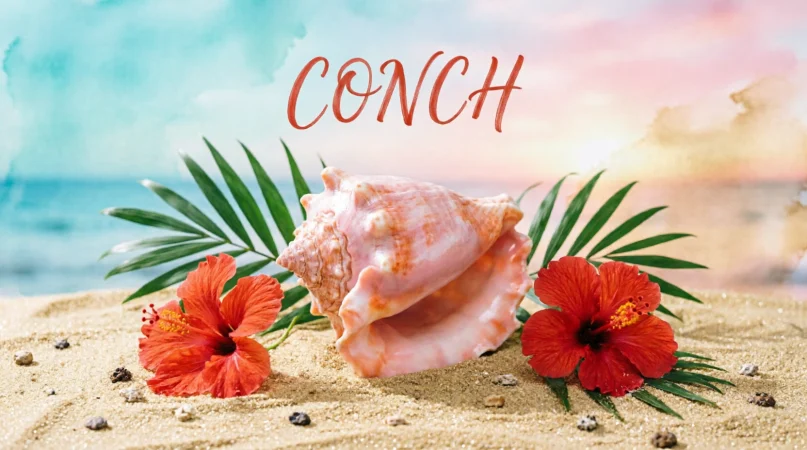
A conch is a large sea snail with a spiral shell, or the shell itself. The shell is often used as a musical horn, decorative object, or religious symbol in many cultures. The word conch can also refer to the marine mollusk that lives inside the shell.
Have you ever heard someone mention a conch and wondered whether they’re talking about a seashell, a musical instrument, or something with deeper cultural significance? The word appears in nature, history, religion, literature, and even everyday conversation, making it more meaningful than many people realize. Understanding what a conch is can help you better appreciate its role across different traditions and contexts.
In its most common sense, a conch is a large marine snail with a spiral shell, often recognized for its beautiful shape and ability to be blown like a trumpet after being prepared. Beyond its biological meaning, the conch has long symbolized communication, spirituality, leadership, and ceremony in many cultures around the world. In this guide, you’ll learn the meaning of conch, its pronunciation, origin, symbolism, common uses, and real-life examples so you can understand and use the term with confidence.
Physical Characteristics
- Shell: The conch shell is a large, heavy, spiral structure. The outer surface is usually brownish or cream-colored, while the interior lip (the opening) is a striking pink or orange. This pink lip is a hallmark of the Queen Conch and makes it highly sought after for decorative purposes.
- The Animal: Inside the shell lives a soft-bodied snail with two long stalks that end in eyes. It has a muscular foot that it uses to move along the ocean floor, often by a unique “hopping” motion.
- Reproduction: Conchs reproduce sexually. Females lay long, gelatinous egg masses on the seafloor, which can contain hundreds of thousands of eggs!
Where Do Conchs Live?
Conchs thrive in:
- Seagrass beds
- Sandy bottoms
- Coral reefs
- Shallow coastal waters
They are herbivores, feeding on algae and other plant matter.
The Many Layers of Conch Meaning
The conch meaning is not limited to just the animal itself. It has taken on a rich tapestry of symbolic, cultural, and practical meanings across the globe.
Conch as a Musical Instrument
One of the most ancient uses of the conch shell is as a trumpet. By cutting a small hole in the tip of the shell, humans discovered they could blow into it to produce a loud, resonant, and hauntingly beautiful sound.
- In Indigenous Cultures: Native American, Pacific Islander, and Caribbean Indigenous peoples used conch trumpets for communication, ceremonial purposes, and warfare.
- In Military History: Conch shells were used as signaling devices in ancient battles.
- In Pop Culture: The conch trumpet appears in movies like The Beach and Lord of the Flies.
Conch as a Symbol of Power and Authority
In many cultures, the conch shell symbolizes power, authority, and command.
- Hinduism: The conch shell, known as the shankha, is one of the most important sacred symbols. It is associated with Lord Vishnu and is blown during religious ceremonies to ward off evil spirits and mark the beginning of auspicious events. In the epic Mahabharata, Lord Krishna blew a conch to signal the start of the great war of Kurukshetra.
- Buddhism: The conch is one of the Eight Auspicious Symbols of Buddhism. It represents the spread of the Buddha’s teachings (the “Dharma”)—just as the sound of the conch travels far and wide, so too should wisdom and truth.
- Indigenous Caribbean: The Taíno people used the conch as a symbol of leadership and used its trumpet to communicate across long distances.
Conch in Literature and Popular Culture
The conch meaning has been immortalized in literature, most famously in William Golding’s Lord of the Flies (1954).
- In the novel: A conch shell is discovered by the stranded boys and becomes a symbol of civilization, order, and democratic authority. Whoever holds the conch has the right to speak, and it is used to call meetings.
- Symbolism: As the boys descend into savagery, the conch loses its power and is eventually shattered representing the complete collapse of civilization and rationality.
In modern pop culture, the conch appears in:
- Video Games: Animal Crossing features conches as collectible shells.
- Movies: Pirates of the Caribbean includes conch shells as decorative items.
- Music: Reggae and Caribbean music often reference conch shells in lyrics and album art.
Conch as Food: A Caribbean Delicacy
Let us not forget the culinary conch meaning! In the Caribbean, conch meat is a beloved staple.
Popular Conch Dishes:
- Conch Fritters: Deep-fried balls of conch meat, flour, and spices crispy on the outside, tender on the inside.
- Conch Chowder: A hearty, tomato-based soup filled with vegetables and chunks of conch.
- Conch Salad: A refreshing ceviche-style dish with lime juice, onions, peppers, and tomatoes.
- Cracked Conch: Pounded, breaded, and fried conch, similar to a fried pork chop.
Taste and Texture: Conch meat is slightly sweet, chewy, and has a mild seafood flavor. It is often compared to scallops or clams but has a firmer texture.
Sustainability: It is important to note that conch populations have declined due to overfishing. Many countries now have regulations and seasonal bans to protect the species. When eating conch, look for sustainable sources.
Real-World Examples of Conch in Action
Let us look at some practical, real-world scenarios where the conch meaning comes into play. I have included tones and emojis for social media or conversational contexts.
Example 1: Beach Discovery (Friendly & Curious)
Context: A family vacation on a Caribbean island.
Example: “Look what we found on the beach! This conch shell is absolutely gorgeous. Can you believe this is actually a snail’s home? 🐚”
Tone: Excited, wonder-filled. 🌴☀️
Emoji: 🐚🌊
Example 2: Culinary Experience (Neutral & Descriptive)
Context: A food blog post.
Example: “Today we tried authentic Bahamian conch fritters. They were golden, crispy, and packed with flavorful seafood goodness. Highly recommend!”
Tone: Enthusiastic, appreciative. 🍽️😋
Example 3: Religious/Cultural Context (Formal & Respectful)
Context: A Hindu wedding ceremony.
Example: “The priest blew the conch shell (shankha) three times to signal the beginning of the sacred rituals. The sound was deep, resonant, and filled the entire temple.”
Tone: Reverent, formal. 🕉️🙏
Example 4: Symbolic/Literary (Thoughtful & Intellectual)
Context: A classroom discussion about Lord of the Flies.
Example: “The conch in the novel represents civilization and order. When it breaks, it signals the boys’ complete descent into chaos and savagery.”
Tone: Analytical, academic. 📚🧠
Example 5: Decorative & Artistic (Casual & Appreciative)
Context: An Instagram post of home décor.
Example: “Added this stunning conch shell to my bookshelf. It brings such a beautiful coastal vibe to the room! 🐚✨”
Tone: Aesthetic, relaxed. 🏖️🛋️
Types of Conch Shells: A Comparison Table
Not all conches are the same. Here is a comparison of some of the most well-known species.
| Type of Conch | Scientific Name | Location | Key Features | Common Uses |
|---|---|---|---|---|
| Queen Conch | Aliger gigas | Caribbean, Florida Keys | Large, pink-orange lip. Iconic. | Food, decoration, jewelry. |
| Fighting Conch | Strombus alatus | Florida, Gulf of Mexico | Smaller, more aggressive. Spiky shell. | Aquarium trade, decorative. |
| Horse Conch | Triplofusus giganteus | Southeastern US | Very large, orange-brown. Predatory. | Display, collectible shells. |
| Giant Conch | Syrinx aruanus | Australia, Indo-Pacific | The largest marine snail (up to 3 feet!). | Indigenous tools, decoration. |
| Triton Conch | Charonia tritonis | Indo-Pacific | Striking spiral, used as a trumpet. | Musical instruments, ritual. |
Conch vs. Similar Shells
Many people confuse conch shells with other spiral shells. Here is a quick breakdown.
| Term | What It Is | Key Difference from Conch |
|---|---|---|
| Conch | A specific family of marine snails (Strombidae). | Has a distinct flared lip and a notch near the opening. |
| Nautilus | A cephalopod with a spiral shell. | Internally chambered; not a true “snail.” |
| Whelk | A type of sea snail (Buccinidae). | Narrower, more elongated shell; lacks the flared lip. |
| Cowrie | Small, smooth, egg-shaped shell. | Not spiral like a conch; used as currency historically. |
Conch Meaning in Mythology and Religion
The conch holds profound spiritual significance in several major world traditions.
Hinduism: The Divine Shankha
In Hindu mythology, the conch shell (shankha) is sacred and associated with Lord Vishnu, the preserver of the universe. It is one of the four symbols held by Vishnu (along with the discus, mace, and lotus).
- Ritual Use: The shankha is blown at the beginning of religious ceremonies, pujas (prayers), and auspicious events. Its sound is believed to purify the environment and drive away evil spirits.
- Symbolism: The spiral of the conch represents the infinite cycle of creation, preservation, and destruction. The sound it produces is considered the sacred “Om.”
Buddhism: The Dharma Conch
In Buddhism, the conch is one of the Eight Auspicious Symbols. It represents:
- The spread of the Buddha’s teachings: Just as the sound of the conch travels in all directions, so too should wisdom and truth spread universally.
- Fearlessness: The conch’s loud sound is believed to awaken disciples from ignorance.
- Victory: It symbolizes triumph over obstacles and negativity.
Indigenous Caribbean and Mesoamerican Cultures
The Taíno people of the Caribbean used conch shells as:
- Trumpets: For communication across villages and islands.
- Tools: As scrapers, utensils, and ornaments.
- Ceremonial objects: In religious rituals and chieftain ceremonies.
How to Identify a Conch Shell
If you are beachcombing and find a beautiful shell, here is how to tell if it is a true conch.
- Flared Opening: True conch shells have a distinctive flared lip (the opening) that is wider than the rest of the shell.
- Spire: They have a prominent, pointed spire (the top part of the shell) with distinct ridges.
- Notch: Look for a small notch or indentation near the opening a key feature of the Strombidae family.
- Color: The interior of the lip is often pink, orange, or creamy white.
Sustainability and Conservation
Understanding the conch meaning also means understanding the importance of conservation. The Queen Conch is currently listed as a threatened species in parts of its range.
Why Are Conchs at Risk?
- Overfishing: High demand for conch meat and shells has led to population declines.
- Habitat Loss: Coastal development and pollution destroy seagrass beds where conchs live.
- Illegal Trade: Poaching and unregulated harvesting.
What You Can Do
- Buy Sustainable: Look for conch products with eco-certifications or from regulated fisheries.
- Avoid Souvenir Shells: Be cautious about buying wild-harvested conch shells as souvenirs.
- Support Conservation: Donate to marine conservation organizations working to protect conch populations.
Conch in Modern Culture and Marketing
The conch meaning has also entered the world of branding and aesthetics.
- Interior Design: Conch shells are popular in coastal-themed décor, adding a touch of ocean elegance to homes.
- Fashion & Jewelry: Conch pearls (rare pearls found inside conchs) are highly prized. The pink conch pearl is especially valuable.
- Branding: Restaurants, hotels, and resorts often use the conch shell as a logo or symbol to evoke tropical luxury and relaxation.
FAQs
Here are eight commonly asked questions about the conch meaning.
1. What is the simple meaning of conch?
A conch is a large, spiral-shelled sea snail found in warm waters, especially in the Caribbean. The term can refer to the animal, its shell, or the meat used in cooking.
2. Can you eat conch?
Yes, conch meat is a popular delicacy in Caribbean cuisine. It is eaten as fritters, chowder, salads, and “cracked conch.” It has a mild, slightly sweet seafood flavor.
3. What does a conch shell symbolize?
The conch shell symbolizes power, authority, communication, and spiritual awakening. In Hinduism and Buddhism, it is a sacred symbol. In literature, as in Lord of the Flies, it represents civilization and order.
4. Is conch a snail?
Yes, a conch is a type of large sea snail a marine gastropod mollusk. It moves along the ocean floor using a muscular foot.
5. Why is conch meat chewy?
Conch meat is naturally firm and can be chewy if not prepared properly. It is often pounded or marinated to tenderize it before cooking.
6. What does conch taste like?
Conch has a mild, slightly sweet seafood flavor, often compared to scallops, clams, or lobster. The texture is firm and slightly chewy.
7. Is it illegal to collect conch shells?
In some areas, it is illegal to collect living conchs or even empty shells, depending on local conservation laws. Always check local regulations before collecting.
8. What is the spiritual meaning of the conch shell?
Spiritually, the conch shell represents the spread of wisdom, purification, and the defeat of ignorance. Its spiral shape symbolizes the cycles of life, death, and rebirth.
Conclusion
The conch meaning is far richer and more fascinating than most people ever realize. What appears to be just a beautiful seashell washed up on a tropical beach is actually a creature that has shaped human culture, cuisine, spirituality, and art for thousands of years. From the sacred shankha blown in Hindu temples to the crispy conch fritters sizzling in Caribbean kitchens, from the symbolic shell in Lord of the Flies to the ancient trumpets of Indigenous warriors, the conch has woven itself into the very fabric of human civilization across continents and generations.
Next time you encounter a conch whether on a shore, on a plate, or in a story you will see it with new eyes. It is not just a shell; it is a symbol of power, a vessel of wisdom, a source of sustenance, and a reminder of our deep connection to the ocean. Just remember to appreciate it responsibly, as overfishing threatens these remarkable creatures. The conch has given us so much music, food, symbolism, and wonder and it deserves our respect and protection in return.

Caleb Foster is a professional content creator at RepllyNova.com, recognized for producing clear, engaging and insightful articles. He is committed to making complex topics understandable, interesting and accessible for all audiences.