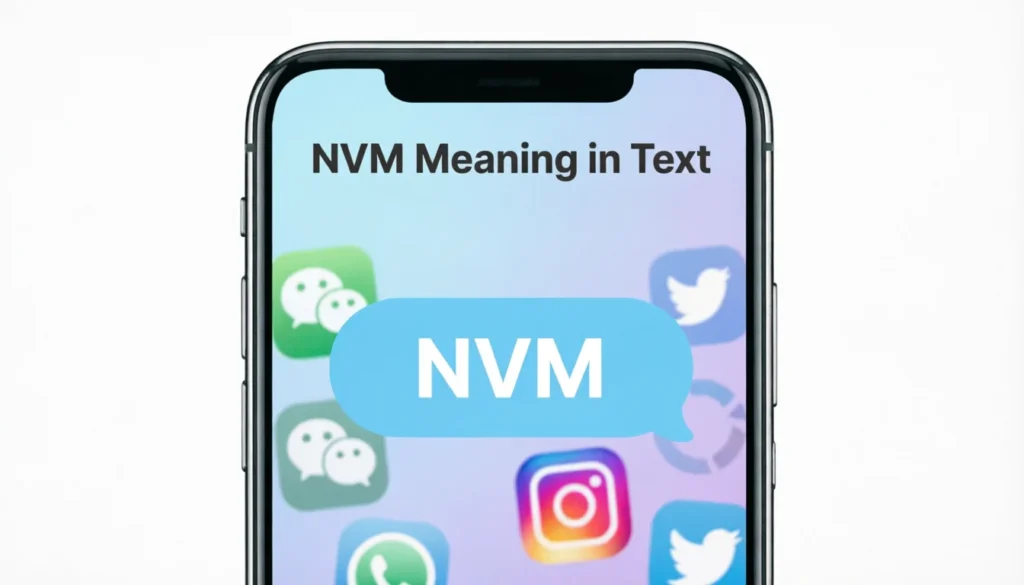

NVM is a popular texting abbreviation that stands for “Never Mind.” It is commonly used in text messages, social media chats, online conversations, and messaging apps to indicate that a question, request, or topic is no longer important or doesn’t need a response.
Featured Snippet Definition
NVM meaning in text: NVM stands for “Never Mind.” People use it when they no longer need an answer, have figured something out themselves, want to drop a topic, or wish to move on from a conversation. Depending on the context, NVM can sound friendly, neutral, impatient, or dismissive.
Example:
- “What time does the movie start?”
- “NVM, I found it online.”
You’re scrolling through messages when someone suddenly replies with “NVM.” Did they change their mind? Did you miss something? In today’s fast paced digital conversations, abbreviations like NVM help people communicate quickly, making it one of the most common texting acronyms you’ll encounter on social media, messaging apps, and online chats.
What Does NVM Mean in Text?
If you’ve received a message saying “NVM” or seen it in a chat, the sender is usually saying:
- Forget what I asked.
- Don’t worry about it.
- I figured it out myself.
- Let’s move on.
- The question is no longer relevant.
NVM is one of the most commonly used internet abbreviations because it’s quick, simple, and easy to type.
Basic Formula
NVM = Never Mind
It helps people save time when texting and prevents unnecessary back-and-forth conversations.
Origin of NVM
The phrase “never mind” has existed in English for centuries, meaning “don’t concern yourself with it” or “ignore what was just said.”
As texting became popular in the late 1990s and early 2000s, users began shortening common phrases to save time and character space. Similar abbreviations such as:
- LOL (Laugh Out Loud)
- BRB (Be Right Back)
- IMO (In My Opinion)
- IDK (I Don’t Know)
became widespread.
“NVM” emerged as the shortened digital version of “never mind” and remains popular across:
- SMS texting
- Snapchat
- Instagram DMs
- Facebook Messenger
- Discord
- Gaming chats
- Online forums
Today, it is recognized worldwide as a standard internet abbreviation.
Why Is NVM So Popular?
People use NVM because it’s:
| Reason | Explanation |
|---|---|
| Fast | Only three letters to type |
| Convenient | Ends a topic quickly |
| Universal | Widely understood online |
| Casual | Fits texting culture |
| Flexible | Works in many situations |
Instead of writing:
“Never mind, I found the answer.”
People simply type:
“NVM, I got it.”
How NVM Is Used in Conversations
The meaning often depends on the context and tone.
1. When You Found the Answer Yourself
This is the most common usage.
Example:
Friend: “What are you looking for?”
You: “NVM, I found it.”
Tone: Neutral and friendly.
2. When You No Longer Need Help
Example:
“Can someone send me the meeting link?”
A few minutes later:
“NVM, I already have it.”
Tone: Polite and practical.
3. When You Want to Drop a Topic
Example:
“What happened between you two?”
“NVM, it’s not important.”
Tone: Can be neutral or slightly emotional.
4. When You’re Frustrated
Sometimes NVM can sound annoyed.
Example:
“Can someone explain this assignment?”
(No response)
“NVM.”
Tone: Frustrated or disappointed.
NVM Meaning on Different Platforms
NVM on Snapchat
On Snapchat, NVM usually means:
- Never mind
- Forget it
- I figured it out
Example:
“What filter did you use?”
“NVM, I found it.”
NVM on Instagram
Instagram users often use NVM in comments and DMs.
Example:
“Where did you buy that jacket?”
“NVM, I saw the brand tag.”
NVM on TikTok
TikTok users commonly write NVM when correcting themselves.
Example:
“NVM, I watched the full video.”
NVM in Gaming
Gamers use NVM to quickly communicate.
Example:
“Can someone drop ammo?”
“NVM, found some.”
This keeps gameplay moving efficiently.
Examples of NVM in Text Messages
Friendly Examples
| Message | Meaning |
|---|---|
| NVM, I got it 😊 | I found the answer |
| NVM, thanks anyway! | Help is no longer needed |
| NVM lol | Forget it, no worries |
| NVM, we’re good | Situation resolved |
Neutral Examples
| Message | Meaning |
|---|---|
| NVM | Forget what I said |
| NVM, I figured it out | Problem solved |
| NVM, it doesn’t matter | Topic dropped |
| NVM, I found the file | Request no longer needed |
Negative or Dismissive Examples
| Message | Meaning |
|---|---|
| NVM. | Slight annoyance |
| Never mind. | Potential frustration |
| NVM, forget it. | Dismissive tone |
| Nvm… | Disappointment or sadness |
Notice how punctuation changes the feeling.
Tone Variations of NVM
One interesting thing about NVM is that the tone changes based on formatting.
| Version | Possible Tone |
|---|---|
| NVM | Neutral |
| nvm | Casual |
| NVM 😊 | Friendly |
| NVM lol | Playful |
| NVM… | Sad or disappointed |
| NVM. | Serious |
| NVM, thanks! | Polite |
| NVM, forget it | Frustrated |
Always consider the surrounding conversation before assuming someone’s mood.
Is NVM Rude?
Not usually.
Most of the time, NVM is perfectly acceptable and means:
“Don’t worry about it.”
However, it can appear rude when:
- Used after someone ignores a question
- Sent without explanation
- Combined with negative wording
- Used repeatedly in arguments
Example of a Rude Tone
Person A: “Can someone help me?”
(No reply)
Person A: “NVM.”
This may suggest annoyance.
Example of a Polite Tone
Person A: “Can someone help me?”
Person A: “NVM, I figured it out. Thanks!”
This sounds much friendlier.
When Should You Use NVM?
NVM works best in casual situations.
Good Times to Use NVM
✅ Texting friends
✅ Family chats
✅ Gaming conversations
✅ Group chats
✅ Informal workplace chats
Situations to Avoid NVM
❌ Formal emails
❌ Professional reports
❌ Academic writing
❌ Business proposals
❌ Customer communications
In formal settings, write out the complete phrase instead.
Professional Alternatives to NVM
If you’re communicating in a professional environment, these options sound more polished.
| Alternative | Best Use |
|---|---|
| Never mind | General professional communication |
| No worries | Friendly workplace chats |
| Disregard my previous message | Formal emails |
| I found the information | Professional updates |
| Thank you, I’ve resolved it | Workplace communication |
| Please ignore my earlier request | Formal situations |
Example
Instead of:
“NVM.”
Write:
“Thank you, I found the information I needed.”
NVM vs Similar Text Abbreviations
Many people confuse NVM with other internet slang terms.
Comparison Table
| Abbreviation | Meaning | Usage |
|---|---|---|
| NVM | Never Mind | Drop the topic |
| IDK | I Don’t Know | Express uncertainty |
| IDC | I Don’t Care | Show lack of interest |
| IMO | In My Opinion | Share an opinion |
| BRB | Be Right Back | Temporary absence |
| JK | Just Kidding | Clarify a joke |
| TMI | Too Much Information | Oversharing |
NVM vs IDC
NVM: Forget it.
IDC: I don’t care.
Example:
- “NVM, I found the answer.”
- “IDC where we eat.”
These meanings are completely different.
Alternate Meanings of NVM
Although “Never Mind” is by far the most common meaning, NVM can occasionally stand for other things depending on the context.
| Meaning | Context |
|---|---|
| Never Mind | Texting and social media |
| Non-Volatile Memory | Computing and technology |
| Network Virtual Machine | Technical discussions |
| Native Voice Manager | Specialized software contexts |
When used in messages, chats, or social media, it almost always means Never Mind.
Common Mistakes When Using NVM
Using It Too Abruptly
Instead of:
“NVM.”
Try:
“NVM, I figured it out. Thanks!”
Using It in Formal Emails
Avoid:
“NVM about the report.”
Use:
“Please disregard my previous request regarding the report.”
Assuming It Is Always Rude
Context matters.
Most users interpret NVM as neutral unless the conversation suggests otherwise.
Quick Cheat Sheet
| Question | Answer |
|---|---|
| What does NVM mean? | Never Mind |
| Is it texting slang? | Yes |
| Is it rude? | Usually no |
| Is it professional? | Not typically |
| Can it be friendly? | Yes |
| Can it sound annoyed? | Sometimes |
| Common platforms? | Snapchat, Instagram, TikTok, WhatsApp |
| Best formal replacement? | Please disregard my previous message |
FAQs
1. What does NVM mean in a text message?
NVM stands for “Never Mind.” It is used when someone no longer needs an answer, wants to drop a topic, or has solved the issue themselves.
2. Is NVM rude in texting?
Not usually. Most people use it casually and neutrally. However, depending on context and punctuation, it can sometimes sound impatient or dismissive.
3. What does NVM mean on Snapchat?
On Snapchat, NVM generally means “Never Mind” and is used the same way it is in regular texting.
4. What does NVM mean from a girl or guy?
The meaning doesn’t change based on gender. It still means “Never Mind,” though the tone depends on the conversation.
5. Is NVM the same as “forget it”?
Often, yes. Both expressions indicate that a topic, request, or question no longer needs attention.
6. Can NVM be used in professional communication?
It’s better to avoid NVM in formal settings. Use alternatives like “Please disregard my previous message” or “I found the information I needed.”
7. Why do people say NVM?
People use NVM to save time, end a conversation topic, indicate they solved a problem, or withdraw a request.
8. What is the difference between NVM and IDC?
NVM means “Never Mind” and signals that something no longer matters. IDC means “I Don’t Care” and expresses a lack of concern or interest.
Conclusion
NVM is one of the most widely used texting abbreviations online, standing for “Never Mind.” It’s a quick way to tell someone that a question no longer needs answering, a problem has been solved, or a topic can be dropped.
While NVM is generally friendly and harmless, its tone can vary depending on context, punctuation, and timing. Adding phrases like “thanks” or “I figured it out” can make it sound more polite and positive.
Whether you’re chatting on Snapchat, Instagram, WhatsApp, Discord, or text messages, understanding NVM helps you communicate more naturally and interpret online conversations accurately.
Key Takeaways
- NVM = Never Mind
- Common in texting, social media, and gaming
- Usually means “forget it” or “I figured it out”
- Tone can be friendly, neutral, or slightly frustrated
- Avoid using it in formal business communication
- Professional alternatives are often better for workplace settings