
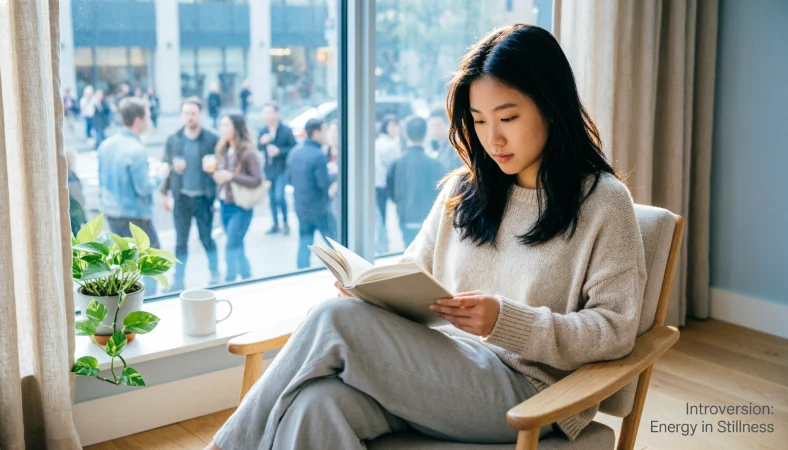
An introvert is a person who tends to feel more comfortable focusing on inner thoughts and ideas rather than external stimulation. Introverts usually recharge their energy by spending time alone or in calm environments instead of large social gatherings.
Introversion is a natural personality type, not a weakness or disorder. Some introverts are quiet and reserved, while others can be social and outgoing in the right situations.
In this guide, you’ll learn the full meaning of introvert, its origin, personality traits, examples, comparisons with extroverts, common myths, professional alternatives, and frequently asked questions.
In today’s fast-moving and highly social world, the word “introvert” is used everywhere. You may hear someone say, “I’m an introvert,” or describe a quiet friend as introverted. But what does the term actually mean?
Many people mistakenly believe introverts are shy, antisocial, or unfriendly. In reality, introversion is a personality trait related to how a person gains and uses energy. Understanding the true introvert meaning can help improve communication, relationships, workplace interactions, and self-awareness
What Does Introvert Mean?
The term “introvert” describes someone whose energy is directed inward. Introverts often prefer:
- Smaller groups instead of crowds
- Deep conversations over small talk
- Quiet environments
- Time alone to recharge mentally
- Reflection before speaking
Being introverted does not mean someone dislikes people. Many introverts enjoy socializing, but too much external stimulation can feel mentally exhausting.
Simple Explanation
Think of social energy like a phone battery:
- Extroverts recharge by being around people
- Introverts recharge by having personal quiet time
Both personality types are completely normal.
Origin of the Word “Introvert”
The word “introvert” comes from the Latin words:
- intro = inward
- vertere = to turn
The concept became popular in psychology through Swiss psychiatrist Carl Jung in the early 1900s. Jung introduced the ideas of introversion and extroversion to explain different personality orientations.
Over time, psychologists expanded the concept, and today introversion is widely recognized as one of the major personality traits in modern psychology.
Why the Term “Introvert” Became So Popular
The popularity of the word has grown because people now openly discuss:
- Mental health
- Personality types
- Social energy
- Work-life balance
- Self-care and boundaries
Social media has also increased awareness of introverted personalities through memes, personality quizzes, and discussions about social burnout.
Today, “introvert” is commonly used in:
- Psychology discussions
- Workplace conversations
- Relationship advice
- Social media captions
- Personality tests like MBTI
Common Traits of Introverts
Not every introvert behaves the same way, but many share certain personality characteristics.
Typical Introvert Traits
| Trait | Description |
|---|---|
| Thoughtful | Often think carefully before speaking |
| Observant | Notice details others may miss |
| Independent | Comfortable spending time alone |
| Deep thinker | Prefer meaningful discussions |
| Calm | Usually enjoy peaceful environments |
| Selective socially | Prefer a few close friends |
Signs Someone May Be Introverted
- They avoid unnecessary small talk
- They need alone time after social events
- They enjoy solo hobbies like reading or gaming
- They prefer texting over phone calls
- They think before responding
Introvert vs Shy: What’s the Difference?
One of the biggest misunderstandings is confusing introversion with shyness.
Key Difference
| Introvert | Shy Person |
|---|---|
| Gains energy from solitude | Feels nervous around people |
| May enjoy socializing in moderation | Often fears social judgment |
| Personality trait | Social anxiety-related behavior |
| Comfortable being alone | Wants connection but feels anxious |
A person can be:
- Introverted but confident
- Extroverted but shy
- Both introverted and shy
- Neither introverted nor shy
Introvert vs Extrovert
Introverts and extroverts process energy differently.
| Introvert | Extrovert |
|---|---|
| Recharges alone | Recharges socially |
| Prefers calm settings | Enjoys stimulation |
| Likes deep conversations | Enjoys broad social interaction |
| Thinks before speaking | Often speaks spontaneously |
| Smaller friend circles | Larger social circles |
Neither personality type is better than the other. Both have strengths and challenges.
Ambivert Meaning Compared to Introvert
Another related term is “ambivert.”
What Is an Ambivert?
An ambivert has a mix of introvert and extrovert traits. They may enjoy social situations sometimes but still need alone time afterward.
Quick Comparison
| Personality Type | Main Characteristic |
|---|---|
| Introvert | Energized by solitude |
| Extrovert | Energized by social interaction |
| Ambivert | Balanced mix of both |
Many people fall somewhere in the middle rather than being fully introverted or extroverted.
Real-Life Examples of Introvert Behavior
Understanding introversion becomes easier through examples.
Example 1: After a Party
Friend: “Why did you leave the party early?”
Introvert: “I had fun, but I needed some quiet time afterward.”
Tone: Friendly and normal
Example 2: Workplace Situation
“I prefer working independently because I focus better in quiet environments.”
Tone: Professional
Example 3: Social Media Caption
“Canceled plans again 😅 Introvert energy.”
Tone: Humorous and casual
Example 4: Classroom Setting
An introverted student may participate less in group discussions but perform exceptionally well in written assignments.
Tone: Neutral and realistic
Different Types of Introverts
Psychologists sometimes divide introverts into different categories.
1. Social Introvert
Prefers small gatherings over large crowds.
2. Thinking Introvert
Enjoys self-reflection and imagination.
3. Anxious Introvert
May feel nervous in highly social situations.
4. Restrained Introvert
Tends to think carefully before acting or speaking.
Most people display a combination of these traits.
Common Misconceptions About Introverts
There are many myths about introverted people.
Myth 1: Introverts Hate People
False. Many introverts enjoy meaningful social interaction.
Myth 2: Introverts Are Always Quiet
Not true. Some introverts are talkative around close friends.
Myth 3: Introverts Lack Confidence
Confidence and introversion are completely separate.
Myth 4: Introverts Cannot Be Leaders
Many successful leaders are introverts because they are thoughtful and observant.
Famous Introverts
Several well-known public figures are believed to have introverted personalities.
Examples often mentioned include:
- Albert Einstein
- Bill Gates
- Emma Watson
- Keanu Reeves
These examples show that introverts can succeed in leadership, creativity, entertainment, and business.
How the Word “Introvert” Is Used Online
The term is extremely common on social media platforms.
Popular Usage Styles
| Usage Style | Example |
|---|---|
| Funny meme | “My introvert battery is dead.” |
| Relatable post | “Need 3 business days to recover after socializing.” |
| Self-description | “Proud introvert ✨” |
| Dating bio | “Introvert who loves coffee and books.” |
Online usage is usually playful and relatable rather than clinical.
Positive Strengths of Introverts
Introverts often possess valuable personal and professional strengths.
Common Strengths
- Strong listening skills
- Deep focus
- Creativity
- Emotional awareness
- Careful decision-making
- Loyalty in friendships
Many introverts thrive in careers involving:
- Writing
- Design
- Programming
- Research
- Art
- Analysis
Challenges Introverts Sometimes Face
Although introversion is normal, some situations may feel difficult.
Possible Challenges
- Social exhaustion
- Networking fatigue
- Pressure to “speak up”
- Misunderstanding from others
- Difficulty in loud workplaces
Learning healthy communication and boundaries can help introverts manage these challenges effectively.
Professional and Polite Alternatives to “Introvert”
Sometimes people prefer softer or more professional wording.
Alternative Terms
| Alternative | Best Use |
|---|---|
| Reserved | Professional settings |
| Reflective | Positive personality description |
| Quiet-natured | Friendly description |
| Thoughtful | Complimenting communication style |
| Private person | Casual conversation |
Example
Instead of:
“He’s antisocial.”
Say:
“He’s more introverted and enjoys quieter environments.”
This sounds more respectful and accurate.
Can Introverts Become More Social?
Yes. Introverts can absolutely develop strong social skills.
Introversion does not prevent someone from:
- Public speaking
- Leadership
- Networking
- Making friends
- Enjoying social events
The key difference is that introverts usually need time to recharge afterward.
Many introverts learn to balance social interaction with personal quiet time.
Introvert Meaning in Psychology
In psychology, introversion is considered a personality dimension rather than a mental health issue.
According to personality theory:
- Introverts are more internally focused
- They may respond more strongly to stimulation
- They often prefer lower-energy environments
Modern personality research treats introversion as a normal human variation.
Introvert Meaning in Relationships
Introverts can form deep and meaningful relationships.
Relationship Strengths of Introverts
- Good listeners
- Emotionally attentive
- Loyal partners
- Thoughtful communicators
Relationship Tips
For introverts:
- Communicate your need for alone time clearly
- Avoid overcommitting socially
For partners of introverts:
- Respect quiet time
- Don’t mistake silence for disinterest
Healthy communication matters more than personality type.
Introvert Meaning in the Workplace
Workplaces are becoming more aware of different personality styles.
Introverts Often Excel In
- Independent projects
- Deep concentration tasks
- Strategic thinking
- Careful planning
Helpful Work Environments
- Quiet offices
- Flexible schedules
- Hybrid or remote work
- Smaller meetings
Many companies now recognize that introverts contribute valuable perspectives and creativity.
Example Sentences Using “Introvert”
Friendly Tone
“I’m an introvert, so I enjoy quiet weekends at home.”
Neutral Tone
“She has an introverted personality and prefers smaller groups.”
Humorous Tone
“My introvert mode activates after two hours of socializing 😂”
Professional Tone
“He works best in focused and low-distraction environments.”
Alternate Meanings of Introvert
The main meaning relates to personality psychology. However, the word may occasionally be used casually to describe someone who:
- Enjoys solitude
- Is less socially active
- Appears quiet or reserved
Still, the psychological meaning remains the most widely accepted definition.
FAQs:
What does introvert mean in simple words?
An introvert is someone who feels more energized by quiet time and less energized by too much social interaction.
Is being introverted the same as being shy?
No. Introversion relates to energy and personality, while shyness involves fear or anxiety in social situations.
Can introverts be talkative?
Yes. Introverts may become very talkative around people they trust or when discussing topics they enjoy.
Are introverts antisocial?
No. Most introverts enjoy socializing in moderation and value close relationships.
Can introverts become extroverts?
Personality traits can evolve slightly, but introverts usually remain naturally more comfortable with lower stimulation environments.
Do introverts like relationships?
Absolutely. Introverts often build deep, loyal, and meaningful relationships.
Is introversion a mental illness?
No. Introversion is a normal personality trait recognized in psychology.
What jobs are good for introverts?
Many introverts thrive in careers involving writing, design, research, programming, analysis, and creative work.
Conclusion
Understanding the true introvert meaning helps break harmful stereotypes and encourages better communication between different personality types.
An introvert is not simply “quiet” or “antisocial.” Introversion is about how people recharge their energy and interact with the world around them. Many introverts are creative, thoughtful, observant, and deeply connected to the people they care about.
Whether you identify as introverted yourself or want to understand someone else better, the key takeaway is simple:
Different personalities thrive in different ways — and introversion is a completely normal and valuable part of human diversity.
By respecting personal boundaries, communication styles, and energy levels, introverts can succeed socially, professionally, and emotionally while staying true to themselves.