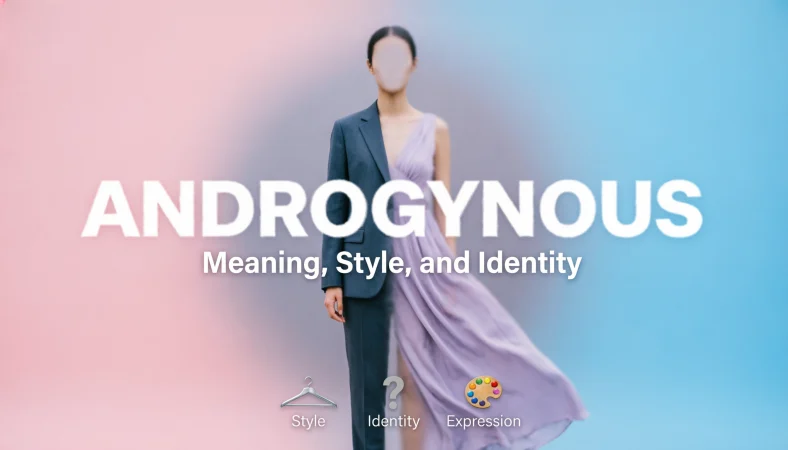
Definition: Androgynous describes a person, style, appearance, or identity that combines or does not strongly fit traditional masculine and feminine traits.
For example, an androgynous outfit might include a loose blazer, simple T-shirt, straight-leg pants, and neutral accessories. The word can describe fashion and appearance, but it can also relate to gender expression.
Have you ever looked at someone and genuinely couldn’t tell if they were male or female? Maybe it was their style, their voice, or just an energy they carried that defied easy categorization. In a world obsessed with putting people into neat boxes, some individuals exist beautifully outside the lines. That’s where the word “androgynous” comes into play.
The term has existed for centuries, but in recent years, it’s become more relevant than ever. From fashion runways to social media bios, from celebrities like Tilda Swinton to everyday people embracing their authentic selves, androgyny is having a cultural moment. But what does it actually mean? Is it about appearance? Identity? Or something deeper? If you’ve ever been curious about the androgynous meaning and how it fits into today’s world, you’re in the right place.
The Origin and Evolution of Androgynous
A Word with Ancient Roots and Modern Relevance
To fully understand the androgynous meaning, it helps to trace its journey through history.
The Ancient Roots
The concept of androgyny isn’t new. In Greek mythology, the prophet Tiresias was said to have experienced life as both a man and a woman. The Greek god Hermaphroditus was depicted with both male and female physical traits. Plato even wrote about humans originally being androgynous creatures before being split into two separate sexes.
The Feminist Movement and Gender Theory
In the 1970s, the term took on new significance. Feminist scholars like Sandra Bem introduced the concept of psychological androgyny, arguing that the healthiest individuals possessed both traditionally masculine and feminine personality traits. It wasn’t about gender identity, it was about breaking free from restrictive gender roles.
Modern Popularity
Today, the androgynous meaning has exploded in popularity. Fashion brands increasingly feature androgynous models. Celebrities like Harry Styles, Janelle Monáe, and Ruby Rose challenge traditional gender presentation. Social media has given a platform to countless individuals who identify as androgynous, and the term is now more widely understood than ever before.
How Is “Androgynous” Used in Real-World Contexts?
Tone and Context Matter
The androgynous meaning shifts slightly depending on how and where it’s used. Here’s how it looks across different contexts.
1. Neutral and Descriptive Context
This is the most common use simply describing someone’s appearance or style without judgment.
- Example: “The fashion show featured androgynous models wearing suits that blurred traditional gender lines.”
- Example: “Their style is quite androgynous they wear both fitted blazers and flowing skirts with equal confidence.”
2. Friendly and Complimentary Context
In casual conversation, people often use the word as a compliment, appreciating someone’s unique ability to transcend gender norms.
- Example: “I love how androgynous your look is today you’re absolutely serving gender-bending vibes! ✨”
- Example: “She has such an androgynous beauty; it’s so striking and memorable.”
3. Personal Identity Context
For some, androgyny isn’t just about clothes it’s about identity. An androgynous person may feel that neither “man” nor “woman” fully captures who they are.
- Example: “I don’t identify as male or female. Androgynous feels right for me; it’s where I’m most comfortable.”
4. Confusing or Negative Context (Warning)
Sometimes people use the term dismissively when they’re uncomfortable with someone who doesn’t fit gender norms. This usage is disrespectful.
- Example: “I couldn’t tell if they were a man or a woman. It was so androgynous, I didn’t know how to act.” (Tone: confused/judgmental).
- Better approach: “I appreciated that their appearance made me rethink my assumptions about gender.”
Androgynous Meaning Comparison: Related Terms
To truly understand the androgynous meaning, it helps to see how it differs from other gender-related terms.
Comparison Table: Androgynous vs. Non-Binary vs. Genderfluid vs. Agender
| Term | Definition | Key Distinction |
| Androgynous | Having both masculine and feminine traits, or a blend of both. | Describes presentation/style/appearance how someone looks or expresses themselves. |
| Non-Binary | An identity that doesn’t fit within the strict male/female binary. | Describes internal identity how someone feels inside. |
| Genderfluid | Moving between different gender identities over time. | Describes fluidity the identity itself changes. |
| Agender | Having no gender or a lack of gender identity. | Describes absence of gender feeling genderless. |
Androgynous vs. Non-Binary: The Key Difference
This is the most common comparison people search for. The difference is essentially presentation vs. identity:
- Androgynous is about appearance and expression. You can be cisgender (identifying with your birth sex) and still present androgynously. A cisgender man can wear makeup and skirts and look androgynous; he’s still a man, just a man with an androgynous style.
- Non-Binary is about identity. A non-binary person doesn’t identify strictly as male or female, regardless of how they dress or look. They may look androgynous, but they could also present more masculine or feminine.
Alternate Meanings of “Androgynous”
While the gender-related meaning is the most common, there are a few other uses worth noting:
- Biology (Androgynous Species):
- Context: Botany and zoology.
- Meaning: Some plants and animals have both male and female reproductive organs.
- Example: “Earthworms are androgynous, possessing both male and female reproductive systems.”
- Psychology (Androgynous Personality):
- Context: Personality psychology (developed by Sandra Bem in the 1970s).
- Meaning: A person who scores high on both masculine and feminine personality traits (such as being both assertive and nurturing).
- Example: “Research suggests that androgynous individuals those comfortable with both traditional masculine and feminine traits tend to have higher self-esteem.”
Polite Alternatives and Respectful Language
When discussing androgyny, using respectful language matters. Here’s how to approach it with sensitivity.
Do’s and Don’ts:
- ✅ Do ask someone their pronouns if you’re unsure.
- ✅ Do use “they/them” if you don’t know someone’s gender.
- ✅ Do let people describe themselves don’t label someone as androgynous unless they use the term for themselves.
- ❌ Don’t say, “What are you?” this is rude and dehumanizing.
- ❌ Don’t assume someone’s pronouns based on their appearance.
- ❌ Don’t ask invasive questions about someone’s body or identity.
Better Alternatives:
- “Their style is very gender-neutral.”
- “They have a really unique aesthetic.”
- “I appreciate how they express themselves.”
Examples of “Androgynous” in Different Sentences
Seeing the androgynous meaning in action helps clarify its usage.
Example 1: Fashion/Appearance
Sentence: “The designer’s new collection is deeply androgynous, with every piece designed to be worn by anyone, regardless of gender.”
Example 2: Personal Identity
Sentence: “I’ve always felt most comfortable with an androgynous presentation I love mixing tailored suits with delicate jewelry.”
Example 3: Celebrity Reference
Sentence: “David Bowie was celebrated for his androgynous style, which challenged gender norms and inspired millions.”
Example 4: Cultural Observation
Sentence: “Androgynous fashion has become increasingly mainstream, with major brands featuring gender-neutral clothing lines.”
A Sample Table: Androgynous vs. Related Concepts
| Concept | Focus | Example |
| Androgynous | Appearance/Style | A person wearing a suit with long hair and subtle makeup. |
| Non-Binary | Identity | Someone who says, “I’m not male or female; I’m both. |
| Genderfluid | Shifting Identity | Someone who feels male some days and female other days. |
| Agender | No Identity | Someone who says, “I don’t have a gender at all. |
| Cisgender | Identity matches birth | Someone assigned female at birth who identifies as a woman. |
FAQs
Here are concise answers to the most common questions people ask.
1. What does androgynous mean in simple terms?
It means blending both masculine and feminine traits. An androgynous person has a look or style that makes it hard to categorize as strictly male or female.
2. Is androgynous the same as non-binary?
No. Androgynous describes appearance/style. Non-binary describes internal identity. You can be non-binary and dress masculine, or be a cisgender man with an androgynous style.
3. Is being androgynous a gender identity?
No, it’s a style or presentation. It’s not an identity label like “male,” “female,” or “non-binary.”
4. What does an androgynous person look like?
There’s no single look it’s about mixing masculine and feminine elements. Examples: short hair with a dress, or a tailored suit with long flowing hair.
5. What’s the difference between androgynous and gender-neutral?
Androgynous blends masculine and feminine. Gender-neutral removes gender markers altogether. Androgynous mixes both; gender-neutral aims for neither.
6. What pronouns do androgynous people use?
It depends on the person, not their appearance. Some use he/him, some she/her, some they/them. Always ask or follow their lead.
7. Can a straight person be androgynous?
Absolutely. Androgyny is about style, not sexuality or identity. A straight, cisgender man can dress and present androgynously.
8. Is androgyny becoming more popular?
Yes. Androgynous fashion and presentation have grown significantly mainstream, with major brands and celebrities embracing it.
Conclusion
Understanding the androgynous meaning is about recognizing that human expression is far more varied than simple male/female boxes. Androgyny is a celebration of blending mixing masculine and feminine elements to create something unique.
The key distinction: androgyny is about presentation, not identity. As society continues evolving, androgyny is becoming a mainstream expression of authenticity, reminding us that we are all far more complex than a single label can capture.