
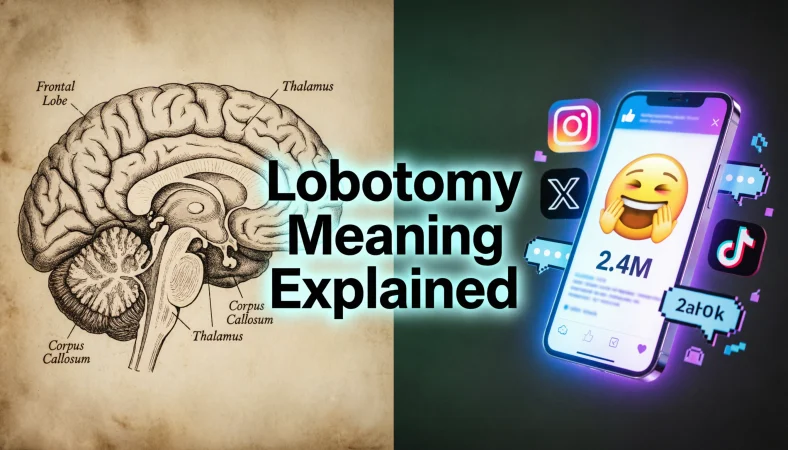
A lobotomy is a historical brain surgery procedure in which connections in the brain’s frontal lobe were severed or damaged to treat mental illnesses or severe emotional disorders. Today, the term is also commonly used metaphorically online to describe someone acting irrationally, emotionally numb, confused, or lacking critical thinking.
The word “lobotomy” can refer to:
- A real medical procedure once used in psychiatry
- A figurative slang expression online
- A cultural reference in memes, jokes, and internet discussions
The term “lobotomy” carries a strong emotional and historical weight. Originally associated with controversial psychiatric treatments in the early 20th century, the word has evolved far beyond its medical roots. Today, you may hear it in documentaries, history discussions, internet memes, social media jokes, or even casual conversations online.
But what exactly does “lobotomy” mean, and why has the term become so recognizable?
Understanding the meaning of lobotomy requires looking at both its medical history and its modern slang usage. While the original procedure was once considered groundbreaking, it later became one of the most criticized practices in mental health history. Meanwhile, internet culture transformed the word into a dramatic way of describing confusion, poor decisions, emotional numbness, or bizarre behavior.
Origin of the Word “Lobotomy”
The word lobotomy comes from Greek roots:
- “Lobos” meaning “lobe”
- “Tomia” meaning “cutting”
So, the literal meaning is:
“Cutting into a lobe of the brain.”
The procedure specifically targeted the frontal lobes, which are responsible for:
- Decision-making
- Emotional regulation
- Personality
- Behavior
- Planning and judgment
The term became widely known during the 1930s and 1940s when doctors used lobotomies to treat patients with:
- Depression
- Schizophrenia
- Anxiety disorders
- Severe emotional distress
What Was a Lobotomy?
A lobotomy was a type of psychosurgery intended to alter brain function.
Simple Explanation
Doctors believed that cutting certain brain connections could reduce severe emotional suffering or aggressive behavior.
The procedure aimed to “calm” patients, but it often caused devastating side effects.
How the Procedure Worked
Early lobotomies involved drilling into the skull and damaging parts of the frontal lobe.
Later, a more infamous method called the transorbital lobotomy became popular. This involved:
- Inserting a sharp instrument near the eye socket
- Penetrating the thin bone behind the eye
- Moving the instrument to sever brain connections
The procedure sounds shocking today because modern medicine now recognizes how dangerous and unethical it often was.
Why Lobotomies Became Controversial
At first, some doctors viewed lobotomies as revolutionary because there were few effective psychiatric treatments available.
However, many patients experienced severe consequences, including:
- Personality changes
- Emotional numbness
- Memory problems
- Reduced intelligence
- Lack of motivation
- Permanent disability
As psychiatric medicine improved and ethical concerns grew, lobotomies largely disappeared by the 1960s and 1970s.
Today, the procedure is widely viewed as a dark chapter in medical history.
Famous Historical Context of Lobotomy
One of the most well-known cases involved Rosemary Kennedy, sister of John F. Kennedy. Her lobotomy reportedly caused permanent cognitive impairment and became a major example of the procedure’s risks.
Lobotomies also appeared in films and literature, including:
- One Flew Over the Cuckoo’s Nest
- Historical psychiatric documentaries
- Medical ethics discussions
These cultural references helped cement the word in public memory.
Modern Slang Meaning of “Lobotomy”
Today, “lobotomy” is often used figuratively online.
People may jokingly say things like:
- “This app gave me a lobotomy.”
- “Watching that video felt like a lobotomy.”
- “I lost brain cells after reading those comments.”
In slang usage, the term usually suggests:
- Mental confusion
- Emotional numbness
- Lack of logic
- Extreme boredom
- Silly or irrational behavior
The tone is usually:
- Sarcastic 😵
- Dramatic 😂
- Dark humor-based
- Hyperbolic
Lobotomy Meaning in Internet Culture
Internet slang often exaggerates emotions or reactions for humor.
When users say:
“That movie lobotomized me.”
They do not mean literal surgery. Instead, they mean:
- The content felt mentally exhausting
- It made them feel “brain-dead”
- It was absurd or difficult to process
This metaphorical usage became popular through:
- TikTok
- Meme culture
- Gaming communities
- Dark humor trends
Example Table: Real vs Slang Usage of Lobotomy
| Context | Example Sentence | Meaning | Tone |
|---|---|---|---|
| Medical | “Lobotomy was once used in psychiatric treatment.” | Actual brain surgery | Serious |
| Historical | “The documentary explored lobotomy practices in the 1940s.” | Medical history | Informative |
| Slang | “That homework gave me a lobotomy.” | Mentally exhausting | Humorous |
| Meme | “TikTok comments are a collective lobotomy.” | Lack of logic or intelligence | Sarcastic |
| Dramatic expression | “I feel lobotomized after that meeting.” | Mentally drained | Casual |
Is It Offensive to Use the Word “Lobotomy”?
It can be.
Because lobotomy is connected to real psychiatric history and patient suffering, some people may find casual jokes insensitive.
Situations Where It May Be Inappropriate
Avoid joking about lobotomy in:
- Professional mental health settings
- Medical discussions
- Sensitive conversations
- Formal workplaces
Situations Where It’s Common Online
The slang version is more common in:
- Meme pages
- Casual chats
- Gaming communities
- Social media humor
Context matters heavily.
Professional Alternatives to “Lobotomy”
If you want a more respectful or professional phrase, here are better alternatives.
| Informal Phrase | Professional Alternative |
|---|---|
| “That gave me a lobotomy.” | “That was mentally exhausting.” |
| “I feel lobotomized.” | “I feel mentally drained.” |
| “The internet caused collective lobotomy.” | “The discussion lacked critical thinking.” |
| “This show fried my brain.” | “This content was overwhelming.” |
Related Terms and Similar Expressions
Brain Rot
A slang term meaning excessive exposure to low-quality or addictive content.
Example:
“Scrolling all day gave me brain rot.”
Mind-Numbing
Describes something boring or mentally draining.
Example:
“The lecture was mind-numbing.”
Brain-Dead
Used informally to describe poor judgment or exhaustion.
Example:
“I’m brain-dead after studying all night.”
Emotional Numbness
A psychological term for reduced emotional response.
Unlike slang uses of “lobotomy,” this is a real mental health concept.
Lobotomy vs Brainwashing
| Term | Meaning |
|---|---|
| Lobotomy | Physical alteration of the brain |
| Brainwashing | Psychological manipulation |
| Mind control | Influencing thoughts or behavior |
| Brain rot | Internet slang for low-quality content overload |
People sometimes confuse these terms, but they have very different meanings.
Why the Word Still Remains Popular
Several factors keep the term relevant:
1. Historical Shock Value
The idea of altering the brain surgically remains disturbing and memorable.
2. Pop Culture References
Movies, books, and documentaries continue discussing lobotomies.
3. Internet Humor
Online users exaggerate feelings dramatically for comedic effect.
4. Meme Language
Dark humor and absurd slang made the word trend again among younger audiences.
Psychological and Ethical Discussions Around Lobotomy
Modern medicine now emphasizes:
- Patient rights
- Ethical psychiatric care
- Evidence-based treatments
- Informed consent
Lobotomies are frequently discussed in:
- Medical ethics courses
- Psychology studies
- Mental health documentaries
- Historical research
The procedure serves as a reminder of how medicine evolves over time.
Common Contexts Where You’ll See the Word
Online Memes
“Instagram reels are giving everyone a lobotomy.”
Gaming Chats
“That puzzle lobotomized my entire team.”
Casual Conversation
“I feel mentally destroyed after finals week.”
History Discussions
“Lobotomy became controversial due to severe side effects.”
Tone Guide for Using “Lobotomy”
| Tone | Example | Appropriate? |
|---|---|---|
| Humorous | “That math test lobotomized me 😭” | Casual only |
| Serious | “Lobotomy had devastating medical consequences.” | Yes |
| Sarcastic | “Twitter discourse is collective lobotomy.” | Informal |
| Professional | “The procedure is now considered unethical.” | Best for formal writing |
Alternate Meanings of “Lobotomy”
While the medical definition is primary, the word can also refer to:
- Emotional dullness
- Intellectual shutdown
- Mental exhaustion
- Lack of critical thinking (slang)
However, these are metaphorical meanings rather than literal definitions.
Examples of “Lobotomy” in Sentences
Serious Examples
- “Lobotomy procedures declined after modern psychiatric medications were introduced.”
- “The documentary examined the ethics of lobotomy treatments.”
Casual Slang Examples
- “That three-hour meeting basically gave me a lobotomy.”
- “I lost IQ points reading those comments 😂”
- “This app is pure digital lobotomy.”
Neutral Examples
- “Many people know the term from historical movies and books.”
- “The slang meaning differs greatly from the medical definition.”
Should You Use the Word Online?
You can, but awareness matters.
Good Practice
- Understand the historical context
- Avoid insensitive jokes around mental health
- Use professional alternatives when needed
Casual Online Use
Among friends or meme communities, the slang usage is common and usually understood as exaggeration.
FAQs
What does lobotomy mean in simple terms?
A lobotomy was a medical brain surgery that altered connections in the frontal lobe to treat mental illness. Today, the word is also used as slang for feeling mentally numb, confused, or drained.
Why were lobotomies performed?
Doctors once believed lobotomies could help patients with severe psychiatric disorders like schizophrenia, depression, or anxiety.
Are lobotomies still done today?
Traditional lobotomies are no longer commonly practiced because they were dangerous and caused serious side effects.
What does “that gave me a lobotomy” mean online?
It’s usually a joke meaning:
- “That made me feel mentally exhausted”
- “That was absurd”
- “I lost brain cells from this”
Is “lobotomy” a slang word now?
Yes. While it remains a medical term historically, internet culture also uses it figuratively as slang.
Is it offensive to joke about lobotomy?
Some people may find it insensitive because real patients suffered serious harm from the procedure. Context and audience matter.
What is the difference between lobotomy and brainwashing?
A lobotomy physically altered the brain through surgery, while brainwashing refers to psychological manipulation.
Why is lobotomy mentioned in memes?
The word became popular in memes because it dramatically expresses confusion, mental exhaustion, or absurdity.
Conclusion
The meaning of “lobotomy” goes far beyond a simple dictionary definition. Historically, it refers to a controversial brain surgery once used in psychiatric treatment. In modern internet culture, however, the word evolved into slang describing confusion, emotional numbness, or mentally exhausting experiences.
Because the term carries serious historical significance, it’s important to understand both:
- Its real medical background
- Its modern figurative usage
When using the word online, context matters. Casual meme culture often treats it humorously, but professional or sensitive discussions call for more respectful alternatives like:
- “Mentally drained”
- “Overwhelmed”
- “Mind-numbing”
- “Emotionally exhausted”
Understanding the history and modern usage of lobotomy helps you recognize why the term remains powerful, controversial, and widely discussed today.